How to Get Rid of Art Block Step by Step
To get rid of art block step by step, start by identifying what’s holding you back—whether it’s stress, self-doubt, or distractions. Knowing the root cause can really help you tackle it head-on.
Next, break your project into smaller, manageable chunks. Set focused time slots to work on each part without feeling overwhelmed. This way, progress feels doable and less intimidating.
Try switching up your environment or using quick creative prompts to spark fresh ideas. Sometimes a simple change of scenery or a new challenge can ignite your creativity again.
Remember to be kind to yourself and don’t aim for perfection right away. It’s all about the process, not just the final product. Keep going, and you’ll discover even more ways to rekindle your creativity and keep it flowing.
Key Takeaways
– Identify and acknowledge internal and external triggers causing your art block, such as self-doubt, stress, or distractions.
These can really hold you back if you don’t face them head-on.
– Break down your art project into smaller, manageable tasks to reduce overwhelm and make progress easier.
It’s way less intimidating when you take it step by step.
– Schedule regular, focused time slots dedicated solely to creating art without interruptions.
Consistency helps your creativity flow more naturally.
– Experiment with new materials, techniques, or environments to inspire fresh ideas and perspectives.
Sometimes a little change of scenery or tools can spark something amazing.
– Practice self-compassion by accepting imperfections and reducing perfectionism to maintain creative flow.
Cut yourself some slack — it’s all part of the process.
Identify the Root Causes of Your Art Block
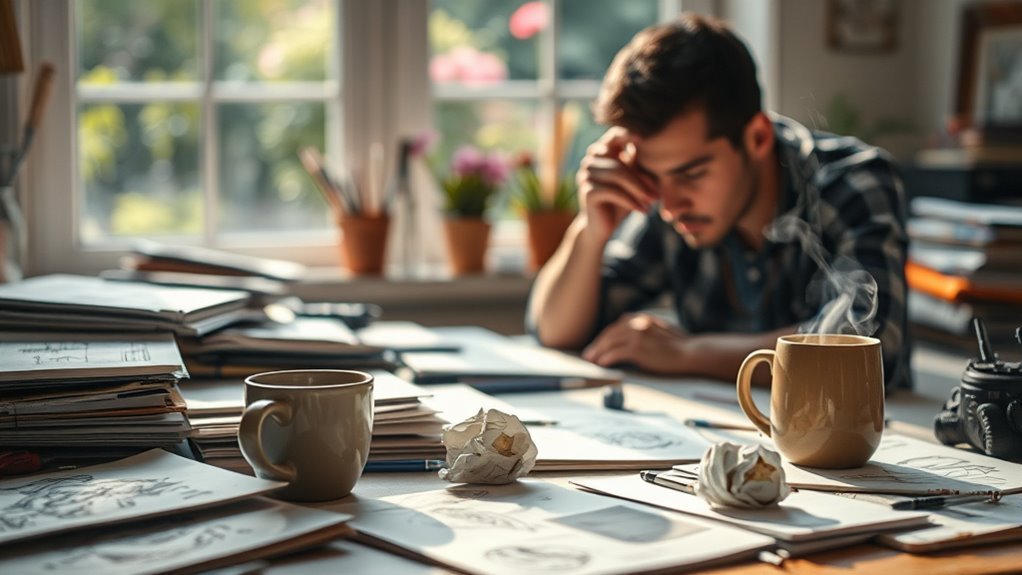
Although art blocks can feel frustratingly vague, pinpointing their root causes is essential to overcoming them. You might face creative blocks triggered by stress, emotional struggles, or burnout, which disrupt your creative process.
Your inner critic often fuels self-doubt and perfectionism, making it tough to start or finish projects. Mental health issues like anxiety or depression also play a significant role by sapping motivation.
External distractions—noisy environments or constant interruptions—can break your focus and hinder inspiration. By recognizing triggers unique to you, whether internal or external, you gain insight into what stalls your creativity.
Understanding these factors lets you address them directly, preventing your art block from becoming a cycle of frustration and inactivity. So, take a moment to really think about what’s holding you back—it can make all the difference.
Implement Practical Strategies to Reignite Creativity
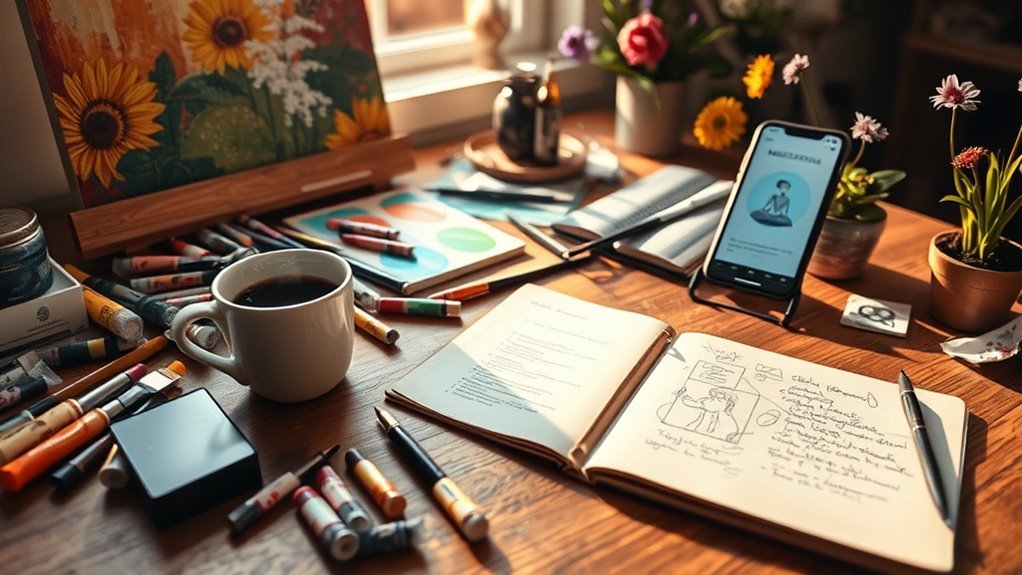
Once you recognize what’s blocking your creativity, you can take concrete steps to move forward. To overcome artists block, break your project into smaller steps and schedule focused time to work with your tools.
Try exploring new materials or changing your environment to spark creativity and inspiration. Use quick exercises to generate new ideas and break free from your creative rut.
Most importantly, practice self-compassion—embrace imperfections and reduce pressure to reignite your flow.
| Strategy | Benefit |
|---|---|
| Break into steps | Reduces overwhelm |
| Schedule time blocks | Builds consistency and momentum |
| Use prompts/exercises | Sparks new ideas |
| Change environment | Fresh inspiration |
| Practice self-compassion | Lowers perfectionist pressure |
Frequently Asked Questions
How to Get Rid of Artblock Fast?
You can get rid of art block fast by taking a short break and doing quick doodles.
Changing your environment can also help refresh your mind. Try setting a timer for spontaneous art to get those creative juices flowing.
Another fun trick is drawing with your non-dominant hand. It’s a great way to spark creativity instantly and break out of that block!
What Are Some Ways to Overcome Art Block?
You can overcome art block by breaking projects into small steps, changing your workspace, and practicing regularly.
Try experimenting in sketchbooks, too. It’s a low-pressure way to explore new ideas.
Also, seek inspiration from nature, galleries, or online communities. These can spark fresh ideas and keep creativity flowing.
Why Am I Stuck in Art Block?
You’re stuck in art block because your fear of failure and perfectionism are holding you back. You’re probably overthinking and criticizing yourself too much, which kills your confidence and stops you from starting or finishing projects.
It’s like you’re caught in this cycle where nothing feels good enough. And the more you try to push through, the harder it gets. But hey, recognizing this is the first step to breaking free!
How Long Does Artblock Last?
Art block can last anywhere from a few days to several months, depending on your stress, mindset, and habits.
Don’t worry—it’s temporary. With patience and practice, you’ll regain your creative flow sooner than you think.
Conclusion
You might think art block is just a phase you’ll outgrow, but what if it’s trying to tell you something deeper? By pinpointing what’s really holding you back and trying fresh strategies, you’re not just pushing through—you’re transforming your creativity.
The real breakthrough happens when you stop fighting the block and start listening to it. Keep going; your next masterpiece is closer than you think, waiting just beyond that wall.
Getting rid of art block isn’t about forcing ideas; it’s about understanding the root causes and embracing new approaches. Step by step, you can break free from creative stagnation and reignite your passion. Remember, overcoming art block means reconnecting with your inspiration and allowing your creativity to flow naturally again. So don’t give up—your artistic breakthrough is just around the corner!