Where Do Art Therapists Work?
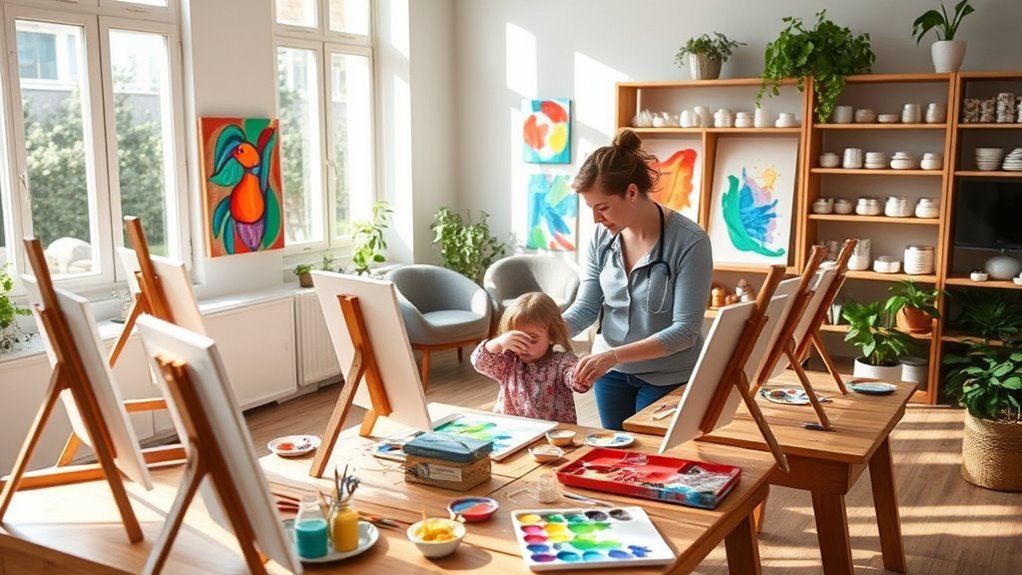
You can work as an art therapist in various places, including hospitals, schools, private practices, and community programs. These settings offer great opportunities to help people express emotions, manage stress, and heal through creative methods.
Art therapy is all about using artistic expression to support mental and emotional well-being.
Many art therapists also use telehealth to reach clients remotely, which expands access beyond traditional settings.
Whether you’re supporting mental health in clinical environments or leading community art projects, your skills bring healing and growth.
Keep exploring to discover even more unique places where your talents can thrive.
Key Takeaways
- Art therapists work in hospitals and mental health clinics to support patients with emotional and psychological challenges.
- They assist students in schools and educational programs to promote emotional development and manage stress.
- Many practice privately or in wellness centers, offering personalized creative therapy sessions.
- Community programs engage art therapists in social healing projects, workshops, and disaster relief efforts.
- Remote work through telehealth platforms allows art therapists to provide accessible therapy via virtual sessions.
Diverse Settings for Art Therapy Practice
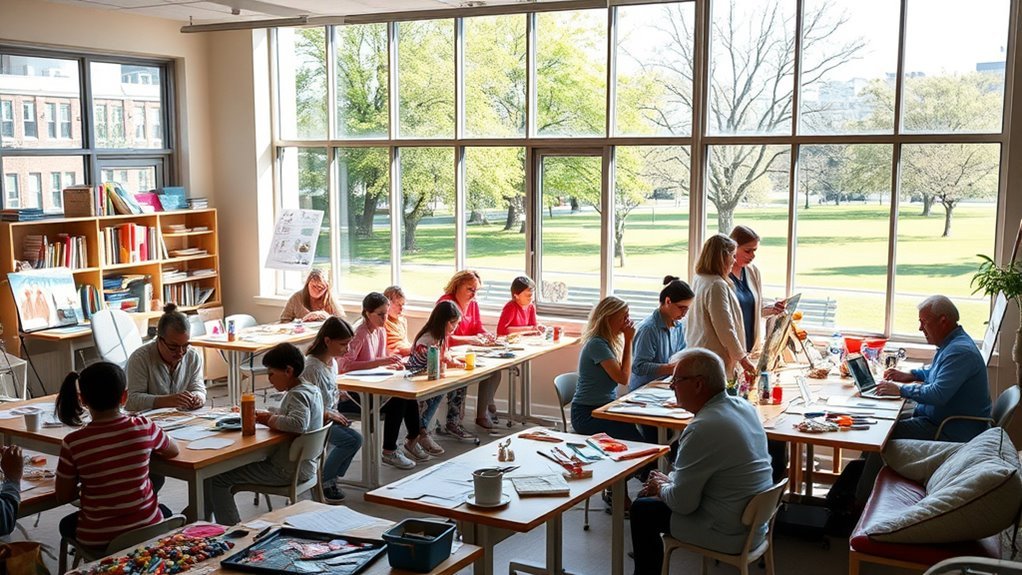
Although art therapists are often associated with clinical environments, they actually work in a wide range of settings that go beyond traditional healthcare. You’ll find them in hospitals and mental health clinics, where they support patients coping with various challenges.
They also work in schools and educational settings, helping students express emotions and manage stress. Private practices and wellness centers offer more personalized care, while community centers and substance abuse programs provide crucial support for recovery.
Forensic institutions employ art therapists to assist individuals involved with the legal system. Increasingly, art therapists use telehealth platforms, allowing you to access therapy remotely.
This diversity in workplace options means art therapy adapts to meet different needs, helping people across many environments to heal and grow through creative expression.
Emerging and Alternative Work Environments
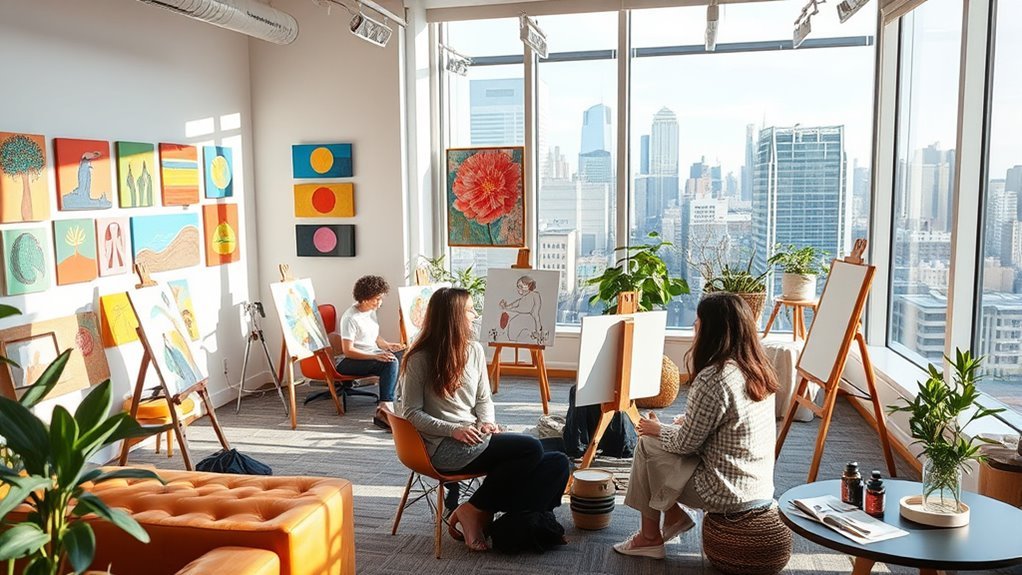
Art therapists don’t just work in traditional settings; they’re also finding new ways to bring creative healing to diverse environments. You can now find them offering remote therapy via telehealth, connecting with clients through video platforms for flexible, accessible care.
Many work with community organizations and nonprofits, leading mural projects and art workshops that promote social healing. In educational programs, art therapists support special education and social-emotional learning, often serving as arts integration specialists in museums and after-school programs.
Additionally, art therapists play essential roles in disaster relief and health crisis response, applying art-based interventions in alternative settings to aid recovery. These emerging environments expand your opportunities, allowing you to use creativity in innovative ways that impact individuals and communities beyond traditional clinical spaces.
Frequently Asked Questions
What Can I Do With a Degree in Art Therapy?
You can help people heal through creative expression, working as a therapist in hospitals, schools, or private practice.
You’ll support mental health, guide art activities, and collaborate with healthcare teams to improve clients’ well-being. It’s a rewarding way to make a real difference in people’s lives.
Where Do Art Therapists Make the Most Money?
Think of your salary as a garden—you’ll make the most money cultivating private practice or clinical roles in metro areas.
Gaining experience, advanced certifications, and specializing will help your income bloom beautifully over $100,000.
Is an Art Therapist a Good Career?
Yes, an art therapist is a good career. You’ll enjoy meaningful work, growing demand, diverse opportunities, and potential for a high salary.
Plus, certifications boost your credibility, making your career stable and rewarding. It’s a path that allows you to help others while building a solid professional future.
What Do Art Therapists Do on a Daily Basis?
You guide clients through creative sessions and analyze their artwork to understand emotions.
Then, you develop personalized treatment plans tailored to each individual.
You also document their progress regularly.
Plus, you collaborate with healthcare teams to support healing and growth through art therapy.
It’s all about using art to help people express themselves and feel better.
Conclusion
So, you’re wondering where art therapists work? Well, besides the obvious cozy studios and hospitals, they might just pop up in places you’d never expect—like corporate boardrooms or even prisons.
Because who wouldn’t want a splash of creativity while negotiating budgets or serving time? If you’re thinking art therapy is just about finger painting, think again.
It’s everywhere, proving that sometimes, saving the world requires a bit of paint and a whole lot of imagination. Art therapists bring creativity and healing to diverse settings, showing that art therapy truly has a place in many unexpected environments. Whether in healthcare, education, or community programs, art therapy helps people express themselves and promotes mental well-being. So, the next time you think of art therapy, remember—it’s not just about art; it’s about healing, growth, and connection in all kinds of workplaces.