3 Stunning Doctor Who Art Pieces Every Doctor Fan Should See
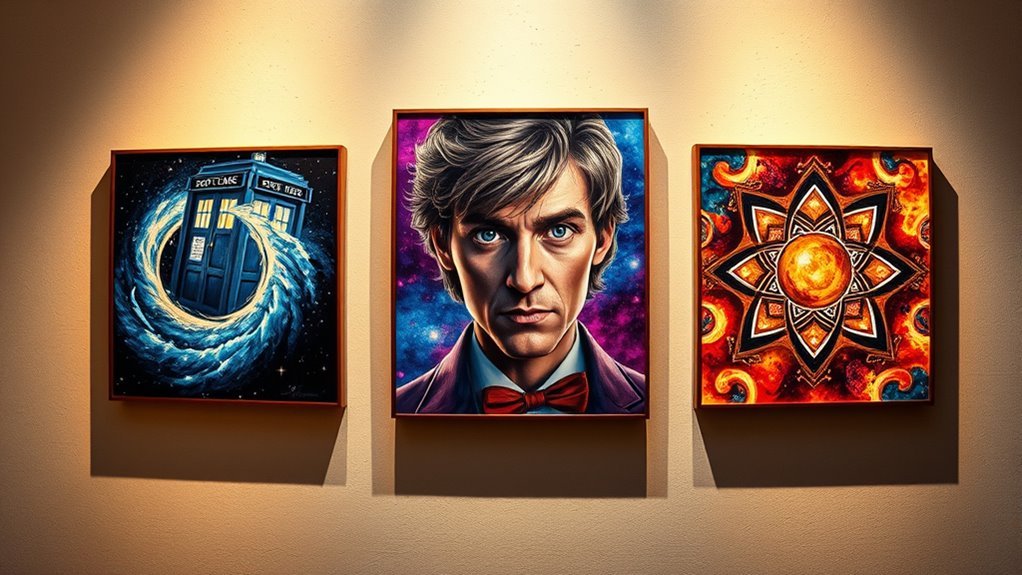
You’ll love the iconic fan art celebrating the 12th Doctor, capturing his bold, rock star vibe and complex inner world through striking visuals. These pieces really bring out the essence of his character in a way that fans can instantly connect with.
Don’t miss art inspired by episodes that cleverly weave famous works like Van Gogh’s portraits and Victorian statues into the story. This creative blend adds layers of emotional depth that make the scenes even more memorable.
Plus, symbolic visuals explore themes like eternity and memory, giving the show a richer meaning beyond the surface. Keep going and discover how these artistic elements transform the Doctor Who universe into something truly extraordinary.
Key Takeaways
- Iconic fan art of the 12th Doctor highlights his rock star persona and complex inner struggles with bold, theatrical visuals. It really captures the essence of his character in a way that’s both striking and memorable.
- Art inspired by Van Gogh’s paintings enriches Doctor Who storytelling by emphasizing emotion and legacy. It’s like seeing the Doctor’s journey through a whole new, vibrant lens.
- Weeping Angels are depicted through eerie Victorian statues like “The Angel of Grief,” blending horror and cultural symbolism. This adds a creepy, haunting layer to their already terrifying presence.
- Portraits of the Doctor’s regenerations symbolize immortality, memory, and the cyclical nature of time. You can almost feel the weight of all those lifetimes in a single image.
- Doctor Who art pieces often incorporate historical and fine art references to deepen character and plot understanding. It’s a clever way to connect the show’s sci-fi elements with real-world culture and history.
Iconic Fan Art Celebrating the 12th Doctor
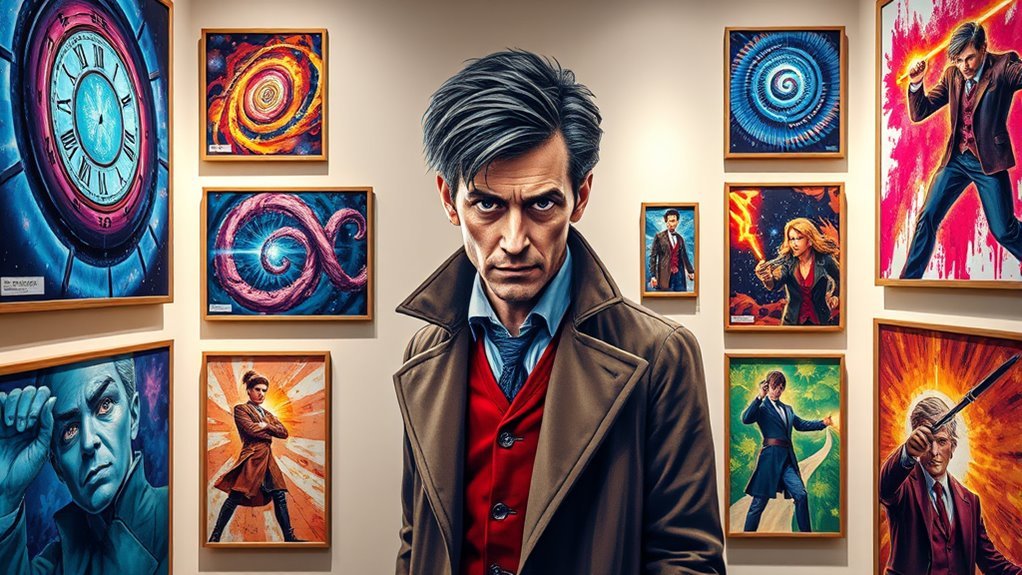
Although the 12th Doctor’s fan art spans many moods and themes, it often highlights his confident, rock star persona and complex inner struggles. When you explore fan art featuring the 12th Doctor, you’ll see him striking bold poses with his guitar or diving into intricate plans, reflecting his theatrical flair.
This art in Doctor depictions captures moments of him drawing maps or examining mysterious symbols, revealing his sharp intellect. You’ll also notice darker pieces illustrating his heavy burdens from the Time War, using glowing blue-green effects against somber backgrounds that convey his inner turmoil.
The fan art community actively engages by praising these creations, encouraging recognition for talented artists, and sharing theories inspired by these vivid portrayals, making the 12th Doctor’s artistic legacy truly iconic.
Artistic Inspirations From Doctor Who Episodes
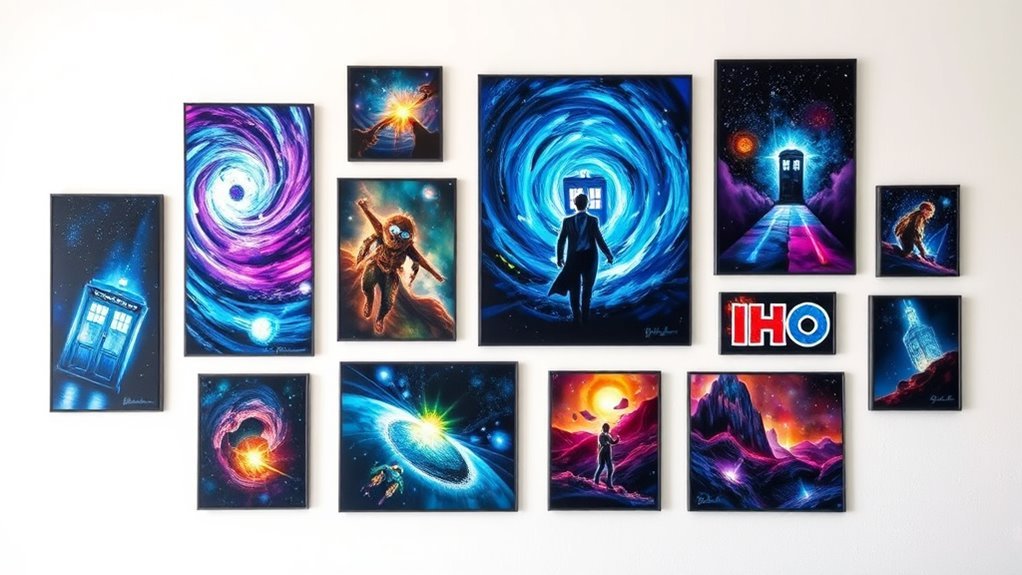
Doctor Who episodes often draw from famous artworks and artistic styles to enrich their storytelling, inviting you to appreciate history and creativity through the show’s lens. In “Vincent and the Doctor,” you’ll see Van Gogh’s self-portrait and “The Church at Auvers” brought to life, blending humor with respect to highlight the artist’s human side.
The Weeping Angels, inspired by Victorian statues like “The Angel of Grief,” merge art and horror, symbolizing sorrow and danger. Other episodes recreate historical paintings, such as François Boucher’s portrait of Madame de Pompadour, adding depth to characters.
Through these artistic inspirations, Doctor Who explores themes of time and legacy. As a fan, you’ll find these references enrich both the show and the impressive fan art pieces they inspire.
Symbolism and Themes in Doctor Who Visuals
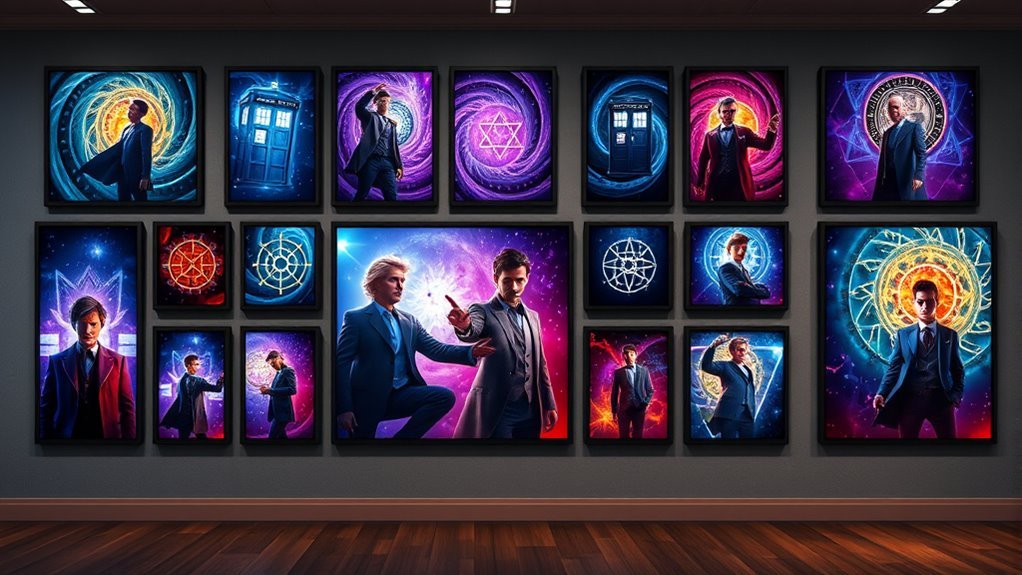
How do visuals in Doctor Who deepen its exploration of time and memory? The show uses powerful symbolism and art to convey these complex themes. You’ll notice time often appears as a circle, highlighting eternity and cyclical history.
Visuals like Vincent van Gogh’s paintings aren’t just background—they emphasize art’s ability to capture emotion and legacy across time. The Weeping Angels, represented as eerie Victorian statues, blend horror with cultural symbolism, making their menace unforgettable.
The Doctor’s regenerations and preserved portraits symbolize immortality and memory, reinforcing cultural continuity. Even historical art references, such as Boucher’s portrait of Madame de Pompadour, enrich character stories and add thematic layers.
Through these visuals, Doctor Who art invites you to explore time, memory, and identity in a vivid, symbolic way.
Frequently Asked Questions
Who Was the Least Favorite Dr. Who?
You’ll find the Sixth Doctor often ranks as the least favorite due to his abrasive nature and bold costume.
However, opinions vary widely, so your least favorite might differ based on which traits or stories resonate with you most.
Why Is the Doctor Who so Woke Now?
You might find it curious that the Doctor got woke just as society did—showrunners want you to see diversity and social issues on screen, making the show relevant and reflective of today’s world, so you connect deeper.
It’s like the show is trying to keep up with the times, you know? Bringing these themes in helps viewers feel seen and makes the stories hit closer to home.
What Is the Most Famous Painting of a Doctor?
The most famous painting of a doctor is Salvador Dalí’s “The Doctor,” showing a surreal, melting figure symbolizing time’s fluidity.
You’ll find it iconic for blending medicine with dreamlike, symbolic imagery that challenges how you see healing.
What Is the Most Famous Quote From Doctor Who?
You might think “Geronimo!” tops the list, but the most famous quote is actually, “All of time and space, everything that ever was or ever will be.”
It perfectly captures Doctor Who’s epic scope and wonder. Pretty cool, right?
Conclusion
Just like the Doctor’s endless journey through time and space, these art pieces invite you to explore new dimensions of creativity and fandom. They capture not only the essence of the 12th Doctor but also the deeper themes that make Doctor Who timeless.
So, whether you’re a seasoned Whovian or just stepping into the TARDIS, these visuals remind you that every adventure, like every brushstroke, holds a story waiting to unfold. Dive into these stunning Doctor Who art pieces and let your imagination soar through every era and every incarnation. After all, in the world of Doctor Who, art and storytelling go hand in hand, making each moment unforgettable for every fan.