What Defines the Empire State Building as Art Deco?
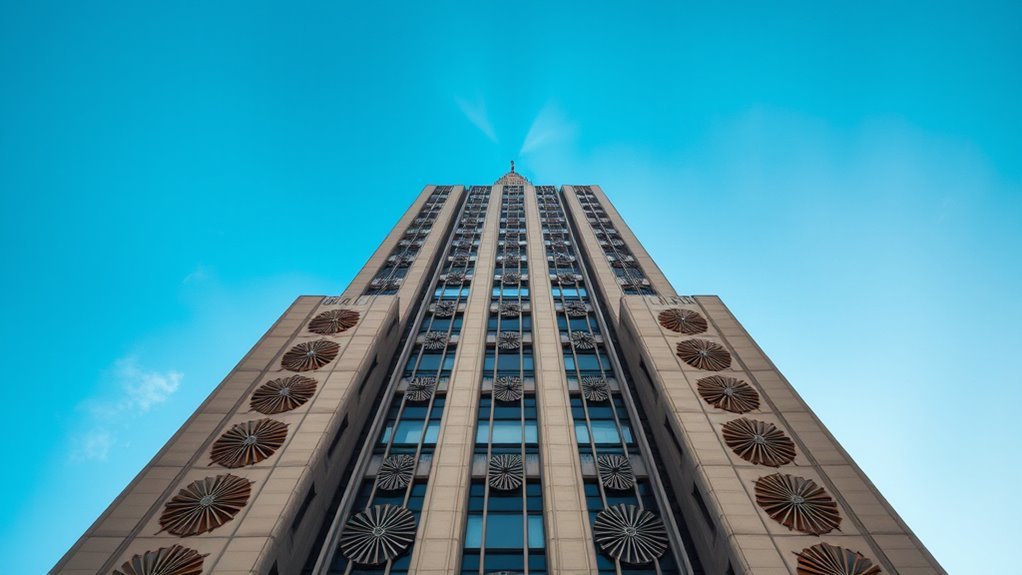
You’ll recognize the Empire State Building as Art Deco through its striking geometric motifs and tiered setbacks that form a stepped pyramid silhouette. These features are classic hallmarks of the Art Deco style, which emphasizes bold shapes and a sense of grandeur.
The building’s sleek vertical steel elements add to that streamlined, modern look typical of the 1930s.
Its facade features stylized lightning bolts and sunbursts, giving it a dynamic, almost electric feel.
Inside, luxurious materials like marble, bronze, and gold leaf murals highlight the elegance and optimism of the era.
This blend of modern ornamentation and a streamlined structure perfectly captures the sophistication of the 1930s.
Keep exploring, and you’ll uncover how every detail reflects this iconic style.
Key Takeaways
- The building’s facade features geometric motifs, sunbursts, and zigzag patterns typical of Art Deco design. These shapes really capture that bold, decorative style from the era.
- Tiered setbacks create a stepped pyramid silhouette inspired by ancient ziggurats, emphasizing verticality. It gives the building that iconic, soaring look that’s hard to miss.
- Aluminum spandrels and steel mullions incorporate stylized lightning bolt patterns symbolizing modernity. It’s like the building is buzzing with energy and progress.
- Luxurious interior materials like marble, bronze, and metallic surfaces reflect Art Deco elegance and sophistication. Walking inside feels like stepping into a glamorous time capsule.
- Decorative murals and medallions celebrate technological progress, reinforcing the era’s optimism and ornamental style. They really highlight how excited people were about the future back then.
Architectural Features Exemplifying Art Deco
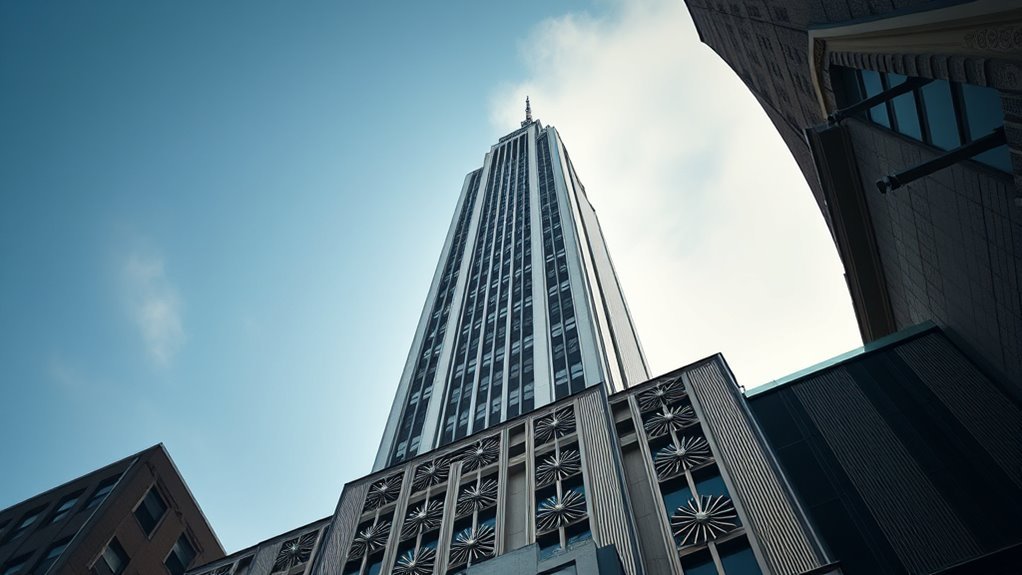
Although you might only see a towering skyscraper at first glance, the Empire State Building‘s architectural features clearly showcase classic Art Deco design. You’ll notice geometric motifs, sunbursts, and zigzag patterns decorating the facade, emphasizing the building’s ornamental motifs.
Its tiered setbacks create a stepped pyramid silhouette, inspired by ancient Ziggurats, reinforcing its iconic profile. The symmetrical form highlights verticality, with vertical steel mullions drawing your eyes upward, enhancing the skyscraper’s soaring presence.
Aluminum spandrels featuring stylized lightning bolt patterns add to the decorative elements, enriching the exterior’s intricate detail. Every aspect, from the facade’s patterns to the structural setbacks, reflects Art Deco’s blend of modernity and ornamentation.
All in all, this makes the Empire State Building a definitive example of the style.
Interior Design and Decorative Elements
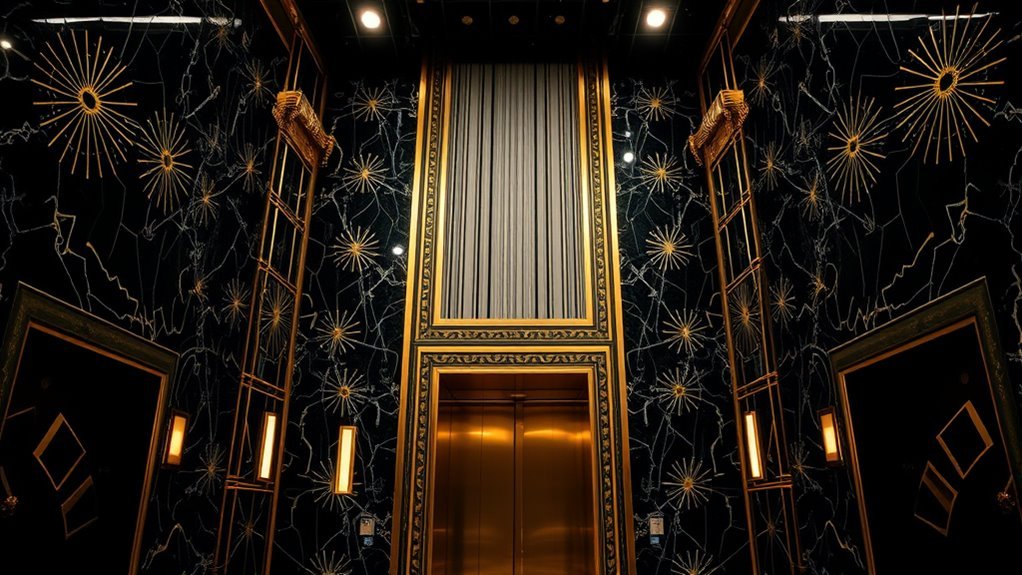
When you step into the Empire State Building’s lobby, you’ll immediately notice how its interior design captures the essence of Art Deco through striking geometric motifs and bold colors. The art deco interior shines with geometric elegance, featuring luxurious marble and metallic surfaces that evoke sophistication.
Restoration efforts have preserved ornamental murals and bronze and aluminum decorative motifs, reflecting luxury materials and modern design influences.
Key elements include:
- A 24-karat gold and aluminum leaf mural depicting gears, symbolizing the mechanical age.
- Medallions celebrating technological advancements like electricity and masonry above the entrance.
- A mural above the information desk showing the Empire State Building with radiating beams of light, emphasizing its modernity.
This blend of geometric motifs and luxury materials defines its timeless Art Deco style. It really makes the lobby stand out as a classic yet modern space.
Frequently Asked Questions
What Buildings Are Considered Art Deco?
You’ll find Art Deco in buildings like the Chrysler Building, Rockefeller Center, and the Empire State Building. They feature geometric shapes, bold ornamentation, sleek vertical lines, and luxurious materials that highlight modernity and elegance.
It’s all about clean, sharp designs that look both stylish and powerful. These buildings really capture that vibe of progress and glamour from the early 20th century.
What Art Style Is the Empire State Building?
You’ll find the Empire State Building wears Art Deco like a crown, shining with geometric patterns and sleek lines.
It blends modern elegance and rich ornamentation, standing as a timeless symbol of 1930s architectural glamour.
Pretty cool how it captures that era’s style, right? It’s like the building itself tells a story of that dazzling decade.
What Type of Style Is the Empire State Building?
The Empire State Building is designed in the Art Deco style. You’ll notice its geometric shapes, bold lines, and decorative motifs.
All of these elements combine to create that sleek, elegant, and distinctly modern look typical of Art Deco architecture. It’s pretty iconic once you spot those details!
Is the Empire State Building Lobby Designed in Art Deco Style?
You’ll find the Empire State Building lobby fully embraces Art Deco style, like stepping into Gatsby’s lavish world—bold geometric patterns, gleaming metals, and celestial murals all shine with that timeless, elegant 1920s glamour.
It’s seriously like walking into a different era, where every detail screams sophistication and style. The design captures that iconic vibe perfectly, making it a must-see for any lover of Art Deco.
Conclusion
You can’t miss how the Empire State Building’s sleek lines and geometric patterns shout Art Deco style. Its interior isn’t just functional—it’s a dazzling display of decorative art, from the lobby’s murals to the intricate metalwork.
Did you know it was the tallest building in the world for 40 years? That’s a proof to its bold design and engineering.
So next time you see it, remember you’re looking at an iconic masterpiece of Art Deco brilliance. The Empire State Building stands as a shining example of Art Deco architecture, blending form and function with striking elegance. Its bold geometric shapes, lavish decorations, and innovative engineering all come together to define what Art Deco is all about. When you appreciate the Empire State Building, you’re appreciating a true symbol of 20th-century design and artistic innovation.