3 Tips to Choose Art for Your Home With Style
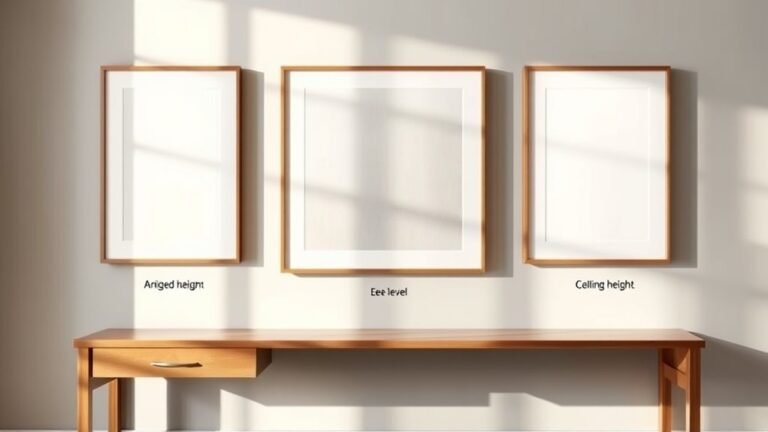
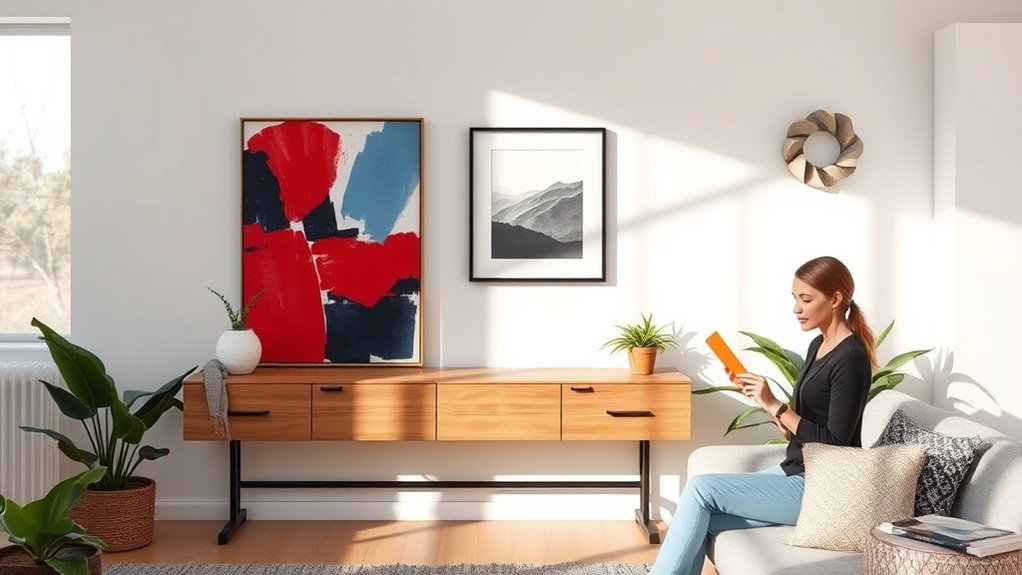
To choose art for your home with style, start by understanding your personal taste and how the piece fits your room’s size and mood. This helps ensure that the artwork complements your existing decor and creates the right atmosphere.
Remember, art is not just decoration—it’s an expression of who you are.
Mix and match different styles, sizes, and frames to create a dynamic, eye-catching display. Don’t be afraid to experiment a little!
A well-curated combination can make your walls pop and add personality to your living space.
Don’t forget to explore affordable sources like local artists or DIY projects to find meaningful pieces that inspire you daily.
Supporting local talent or creating your own art adds a unique touch and can be a fun way to personalize your home.
Keep these tips in mind, and you’ll uncover even more ways to personalize your space beautifully.
Choosing art with style is all about reflecting your individuality while enhancing your home’s vibe.
Key Takeaways
- Select artwork that fits 2/3 to 3/4 of the wall space above furniture for balanced room proportion and style. This helps the art feel like a natural part of the space, not too small or overwhelming.
- Choose art reflecting your favorite colors, themes, and moods to personalize and enhance your home’s atmosphere. When the art speaks to you, your space feels more inviting and truly yours.
- Mix various art styles, sizes, and mediums to create a dynamic, visually interesting, and personalized display. Don’t be afraid to experiment—it keeps things fresh and unique.
- Source affordable, meaningful art from local artists, online platforms, or DIY projects to add unique character. These pieces often have stories that bring even more warmth to your home.
- Curate a harmonious collection by balancing styles, textures, and frame types to maintain an engaging, stylish aesthetic. A little thought here goes a long way in making your space feel cohesive and polished.
Understand Your Personal Style and Space Needs
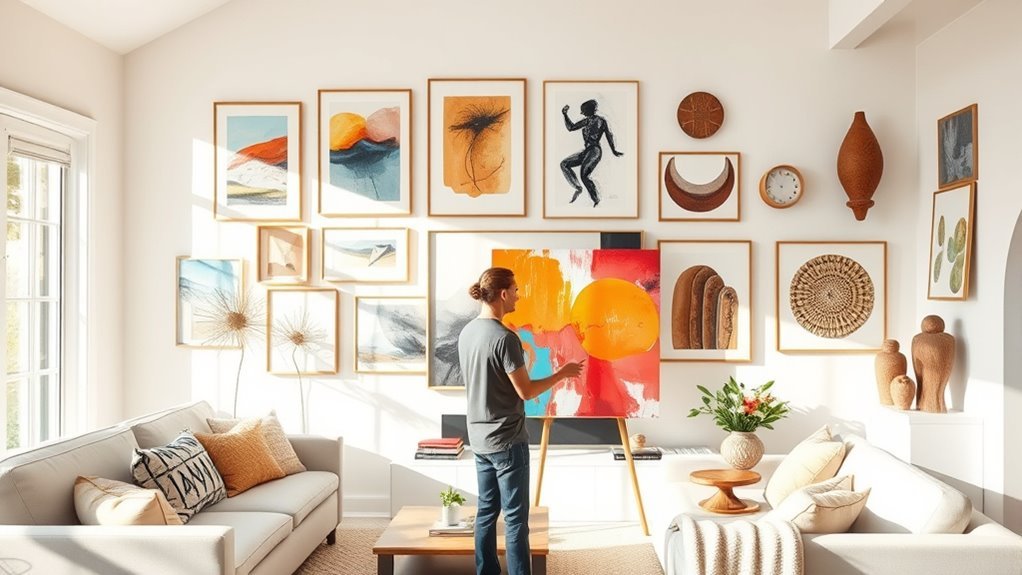
Before choosing art for your home, assess your room’s size and layout to pick pieces that fit proportionally—ideally covering two-thirds to three-quarters of the wall space above furniture.
Understanding your personal style is key; notice favorite colors, themes, and moods in your daily life to guide your art choices.
Consider your space needs and how the room size influences the scale of artwork.
Use visual tools like a mood board to experiment with styles and clarify your evolving preferences.
Align your decor theme and the desired home atmosphere—whether calming or vibrant—with art that enhances the mood.
Mix and Match Art Styles and Sizes Creatively
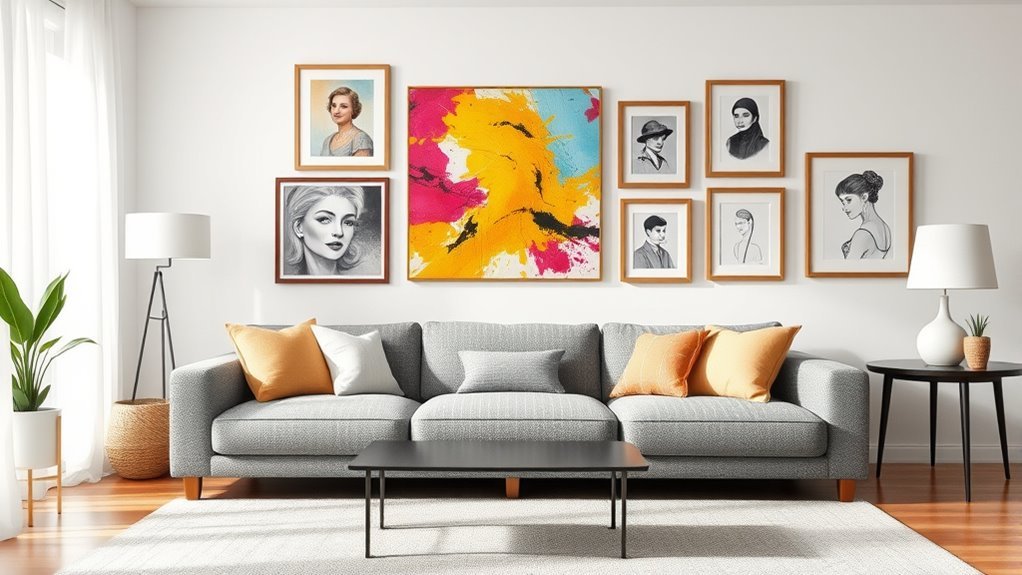
When you mix different art styles and sizes, you instantly create visual interest that keeps a room from feeling dull. Start by combining small, medium, and large art sizes to build a dynamic, layered aesthetic.
Don’t hesitate to mix and match art styles—blend abstract, figurative, vintage, and modern pieces to craft a unique art collection that reflects you. Incorporate different mediums and frame styles to add texture and depth to your curated display.
Experiment with shapes and orientations, such as squares, rectangles, and circular mirrors, to energize the arrangement. This eclectic mix guarantees your walls feel lively and personalized, transforming your space with an artful balance that’s both harmonious and visually engaging.
Find Affordable and Meaningful Pieces That Inspire You
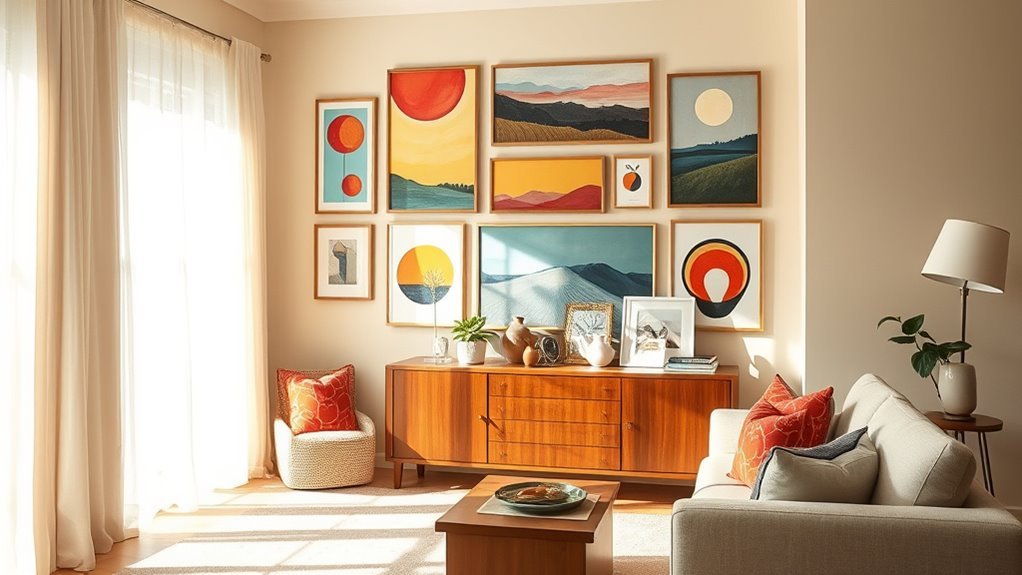
Where can you find art that speaks to you without draining your budget? Affordable art is within reach when you explore local artists, online platforms, and even your own creativity.
Seek meaningful pieces that create a personal connection and inspire you daily. Consider these budget-friendly options:
- Visit local art fairs or galleries to discover authentic art by emerging talents.
- Browse online platforms like Etsy or flea markets for unique, meaningful objects.
- Try DIY projects such as painting or framing objects like tickets or letters for personalized décor.
Frequently Asked Questions
What Is the 3-5-7 Rule of Decorating?
The 3-5-7 rule means you group art or decor in odd numbers—three, five, or seven—to create balance and visual interest.
You’ll avoid perfect symmetry, making your space feel natural and stylish. It’s a simple trick that really changes the vibe of a room.
Plus, grouping in odd numbers keeps things from looking too matchy-matchy, which can get boring.
What Is the 70/30 Rule in Art?
The 70/30 rule in art means you should pick 70% of your pieces to match your room’s style and 30% to add contrast or personality. This balance keeps your space stylish without feeling dull or chaotic.
How to Decide on Artwork for Your Home?
You decide on artwork by matching its size to your wall, reflecting your style and colors, considering the room’s mood, setting a budget, and mixing styles and mediums.
This helps create a personal, balanced look that fits your space perfectly. It’s all about finding what feels right for you and your home.
What Are the 5 C’s of Art?
You’ll want to contemplate the 5 C’s of art: Color, Composition, Content, Craftsmanship, and Context. They gently guide you to choose pieces that speak to your soul and fit beautifully in your space.
Think of them as your artful checklist. Color grabs your attention, while Composition shapes how your eyes move across the piece. Content tells the story, Craftsmanship shows the skill, and Context ties it all together.
Conclusion
Choosing art for your home is like painting the canvas of your life—each piece should reflect your personality and fit your space like a glove. Don’t be afraid to mix bold strokes with subtle shades, creating a vibrant gallery that tells your unique story.
Seek out treasures that speak to your heart without breaking the bank. When you let your walls breathe with meaningful art, your home transforms into a living masterpiece full of style and soul.
Remember, selecting the right art is all about balance and expression. By choosing pieces that resonate with you, you bring warmth and character to your space. So, embrace your creativity and let your home’s style shine through with art that truly speaks to you and complements your décor.