How Many Diamond Art Colors Are There?
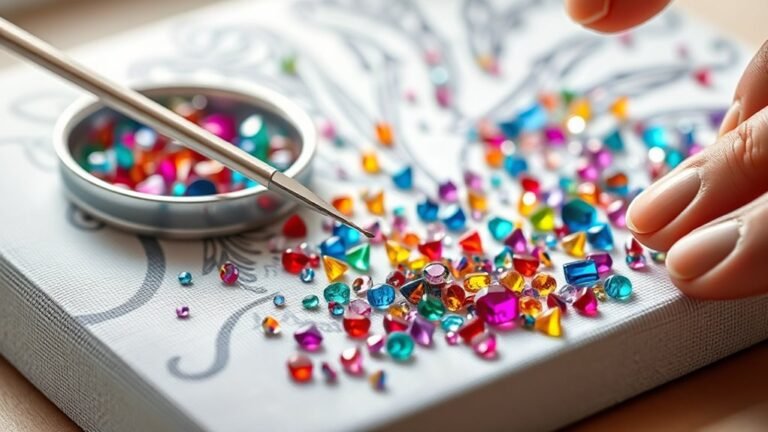
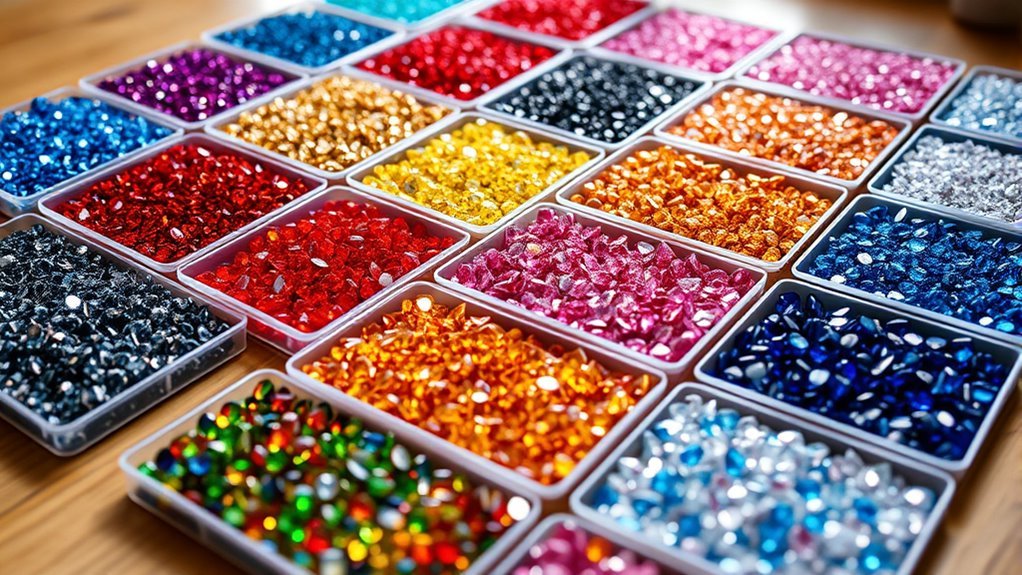
You’ll find hundreds of diamond art colors available, with standard palettes based on the DMC chart containing up to 447 shades. Most kits use between 20 and 70 colors, depending on the size and detail of the project.
Specialty drills like glitter or glow-in-the-dark add even more variety and effects. These options let you create vivid, realistic designs with plenty of sparkle.
Keep going, and you’ll discover how these colors bring your artwork to life. The wide range of colors makes diamond painting super fun and allows for some truly stunning creations!
Key Takeaways
- Diamond art colors are primarily based on the DMC color chart, which includes 447 distinct shades. Most diamond painting kits use between 20 and over 70 colors depending on design complexity.
- Specialty drills like AB, glitter, metallic, and glow-in-the-dark add extra color effects beyond standard shades. These special effects really make your artwork pop.
- Larger and more detailed projects typically incorporate a broader color palette for realism and depth. So, if you want a more lifelike piece, expect to use more colors.
- The extensive color range ensures creative flexibility and precise color matching in diamond art projects. This way, you can bring your vision to life exactly as you imagine it.
Understanding the Color Range in Diamond Painting
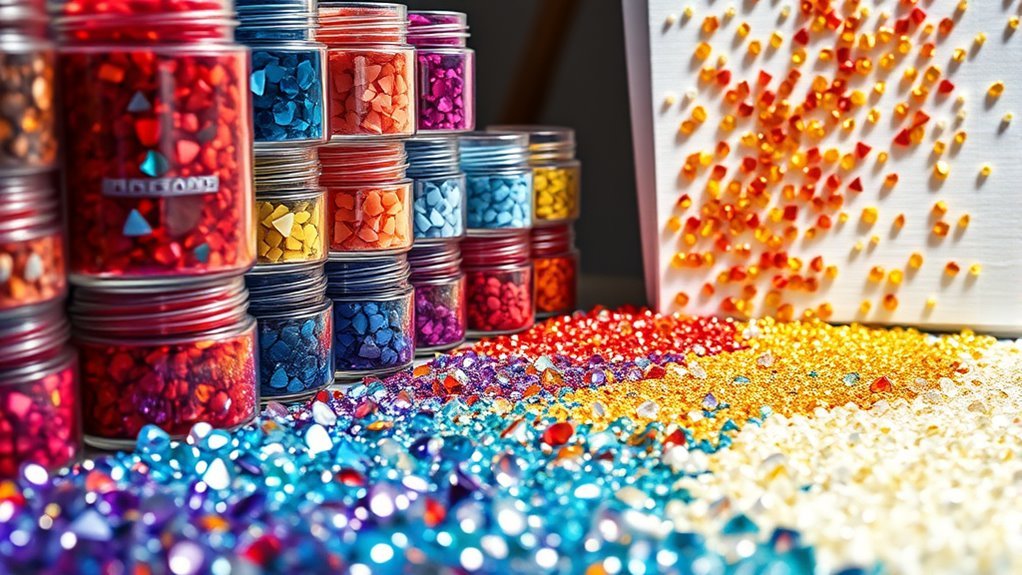
Although diamond painting relies on a standard DMC color chart with 447 unique shades, the actual number of colors in your project varies based on its complexity and size.
You’ll find that most diamond painting kits use anywhere from 20 to over 70 colors, selecting shades carefully to bring your artwork to life.
The palette you work with depends on how detailed and large your design is; bigger projects typically include more colors for richer, more realistic results.
While the DMC color chart provides the standard colors, your diamond painting may also feature specialty drills like AB, glitter, or metallic, which add extra dimension and texture beyond the basic color range.
Understanding this helps you appreciate the variety and depth behind your diamond painting’s colors.
The DMC Color Chart and Specialty Diamond Art Colors
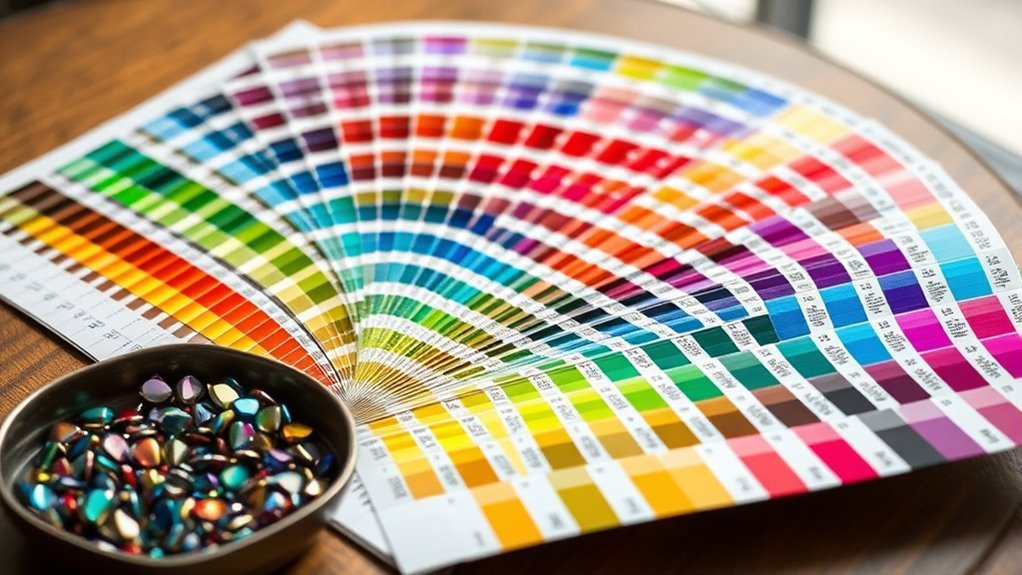
When you immerse yourself in diamond painting, the DMC color chart becomes your essential guide, featuring 447 distinct shades that cover both standard and specialty colors. This extensive color palette includes classic drill colors alongside specialty drills like AB Aurora Borealis, glitter, metallic, and glow-in-the-dark effects.
These artistic shades add depth and sparkle to your projects, enhancing color matching precision. While not every diamond art kit contains all DMC colors, the chart helps you organize and select the perfect drills for custom projects.
Specialty diamonds, often marked with unique codes, let you create standout details. Over time, the DMC color chart has expanded to meet evolving artistic demands, ensuring you have a versatile range of diamond art colors to bring your vision to life.
Frequently Asked Questions
Are All Diamond Dotz Colors the Same?
No, not all Diamond Dotz colors are the same. You’ll find different brands use unique palettes and codes, so colors may vary.
Always check the specific brand’s chart to match colors accurately for your project. It really helps keep your design looking just right!
What Color Is 154 in Diamond Painting?
Color 154 in diamond painting is a bright, vivid yellow shade. You’ll find it perfect for adding cheerful highlights and strong visibility to your designs.
It really makes your art pop with vibrant, sunny accents every time. A great choice if you want your work to stand out!
What Is the Rarest Diamond Color?
You might guess blue, but the rarest diamond colors are actually vivid reds and greens. They’re incredibly scarce, with only a handful known worldwide.
This makes them truly precious and something you’ll rarely encounter. It’s pretty amazing how rare these colors are!
How Many Diamond Colors Are There?
You’ll find over 447 diamond art colors based on the DMC chart, plus extra special effect drills like glitter or glow-in-the-dark.
Your project’s size and detail determine how many shades you’ll actually use. It really depends on what you’re aiming for!
Conclusion
Now that you’ve explored the dazzling spectrum of diamond art colors, you see how each shade brings your masterpiece to life. With hundreds of hues, from the classic DMC chart to specialty tones, your canvas becomes a vibrant playground for creativity.
Like a painter’s palette, these colors don’t just fill space—they tell your story. So, don’t hesitate; let every sparkling gem reflect your unique artistic voice.
With so many diamond art colors available, you have endless opportunities to express yourself. Each color adds depth and sparkle, making your diamond painting truly shine. Dive into the world of diamond art colors and watch your vision come alive with brilliance and charm.