What Is an Art Dealer and How to Navigate the Art Market
An art dealer connects artists with collectors and institutions, helping you buy and sell artwork while authenticating and valuing pieces accurately. Navigating the art market can feel overwhelming, but having an expert by your side makes all the difference.
Art dealers play a key role in bridging the gap between creators and buyers, ensuring each transaction is smooth and trustworthy.
To navigate the art market successfully, you’ll build strong relationships, specialize in a niche, and stay aware of trends and ethical standards to maintain trust.
You’ll also leverage a network that opens doors to opportunities and insights. Keep exploring to uncover how these strategies can boost your success in the art world.
Key Takeaways
- Art dealers connect artists with collectors, authenticate artworks, and facilitate transparent art transactions to ensure fair market value. They play a key role in making sure everyone feels confident about the deals they make.
- They serve as crucial links between artists, collectors, galleries, and institutions, streamlining the buying and selling process. Basically, they keep the art world moving smoothly.
- Navigating the art market requires deep knowledge of art history, market trends, and specialization in a niche to refine strategies. It’s not just about knowing art, but understanding how the market works.
- Building a strong network of collectors, artists, galleries, and auction houses is essential for accessing opportunities and valuable artworks. The more connections you have, the more chances you get.
- Maintaining trust through transparency, ethical standards, and long-term relationships strengthens reputation and supports successful art dealings. At the end of the day, trust is what keeps the art business thriving.
Understanding the Role and Responsibilities of an Art Dealer
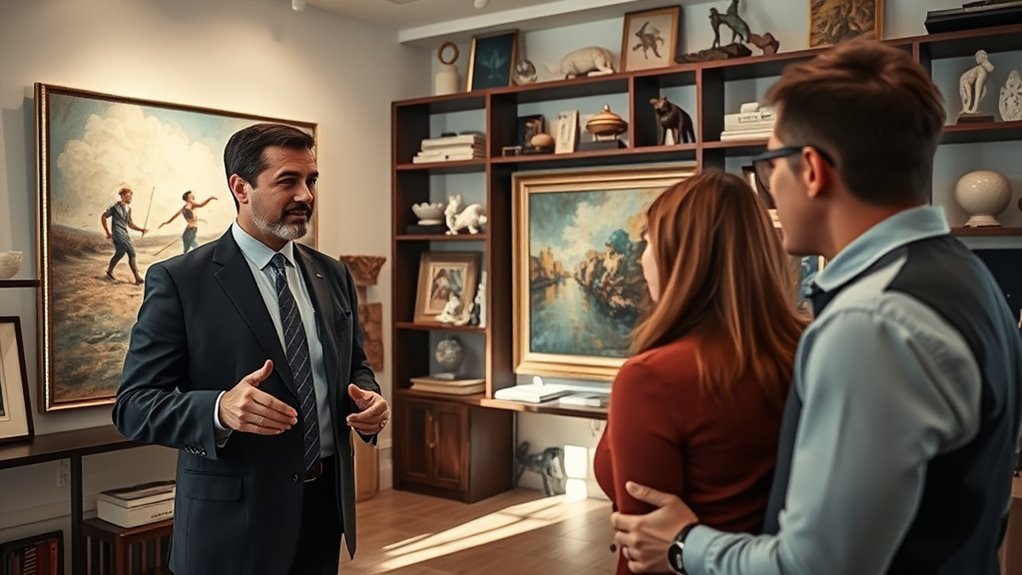
While art dealers play many roles, their core responsibility is to connect artists with collectors and institutions by buying and selling artworks.
Art dealers serve as vital links between artists, collectors, and institutions through the buying and selling of artworks.
As you explore the art market, you’ll see that art dealers rely on their art expertise to evaluate and authenticate pieces. This ensures each artwork’s market value is accurate.
They build strong relationships with artists, art galleries, and other art professionals to stay informed and trusted.
Managing art negotiations and facilitating art transactions require skill and transparency. This helps you gain client trust.
Specializing in specific styles or periods sharpens their knowledge, making them invaluable guides.
When you work with art dealers, you tap into a network that streamlines buying and selling. It makes the entire process smoother and more reliable for everyone involved.
Key Strategies for Successfully Navigating the Art Market

Because the art market constantly evolves, you need key strategies to navigate it successfully. First, deepen your knowledge of art history, market trends, and art valuation to spot valuable artworks and promising emerging artists.
Building a strong art network—including collectors, artists, art galleries, and auction houses—keeps you informed about shifting opportunities. Specializing in a niche helps you stand out as an art dealer and refine your market strategies.
Stay adaptable by monitoring economic and cultural changes that affect prices and demand. Lastly, maintain transparency and uphold high ethical standards; this fosters trust with clients and strengthens your reputation.
Frequently Asked Questions
What Is the 70/30 Rule in Art?
The 70/30 rule means you keep 70% of the artwork’s sale price, while the dealer takes 30% commission.
It’s a common split that helps you and dealers agree on fair payment for selling art.
Basically, it makes sure everyone gets a fair cut without any confusion.
It’s pretty standard in the art world, so most artists and dealers are familiar with it.
What Percentage Does an Art Dealer Take?
Art dealers typically take between 10% and 50% commission, depending on the sale type and artwork.
In galleries, expect around 50%, while private and auction deals vary based on value, rarity, and dealer involvement.
It really depends on the specific situation, so it’s good to ask about the commission upfront.
What Type of Art Is in High Demand Right Now?
Like chasing a Banksy in the city streets, you’ll find high demand in vintage and street art, alongside contemporary AI-generated pieces.
There’s also a growing interest in socially conscious works focusing on climate and culture—you’re exploring a vibrant, evolving art landscape.
What Is the 80/20 Rule for Artists?
The 80/20 rule means you’ll earn most income from just 20% of your artworks or clients.
Focus on nurturing those key pieces and relationships to maximize your sales.
This way, you can grow your art career efficiently without spreading yourself too thin.
Conclusion
Traversing the art market is like sailing through ever-changing seas—you need a steady hand and sharp instincts. As an art dealer, you’re not just buying and selling; you’re connecting stories, people, and passion.
Trust your knowledge, stay curious, and build genuine relationships. These are your compass and map in this vast world.
By doing this, you’ll turn the complex art world into a rewarding journey. Every piece you handle becomes a treasure map leading to new opportunities and discoveries.
Navigating the art market requires more than just transactions. It’s about understanding artists, collectors, and trends. When you blend expertise with passion, you create lasting connections that fuel your success. So, embrace the role of an art dealer with confidence and let your insights guide you through this vibrant and dynamic marketplace.