How to Sell Art on Amazon in 5 Easy Steps
To sell art on Amazon in 5 easy steps, start by setting up a professional seller account with your business and payment info. This is the foundation for reaching millions of potential buyers interested in artwork.
Next, pick art that matches your style and market demand, like prints or originals, so you stand out in the competitive marketplace.
Then, create compelling listings using SEO keywords and quality images. This helps your art show up in search results and attract buyers.
Set competitive prices factoring fees and shipping, choosing self-fulfillment or FBA to fit your needs.
Finally, promote your store with ads, social media, and collaborations to boost visibility and sales. Keep going to uncover tips for boosting sales and visibility.
Key Takeaways
– Register a Professional Amazon Seller account by providing business details and verifying your email.
It’s pretty straightforward, and this step gets you set up to start selling.
– Select art products that match your skills and market demand, such as digital prints or original artworks.
Think about what you enjoy creating and what buyers are looking for.
– Create optimized product listings with keyword-rich titles, engaging descriptions, and high-quality images.
This helps your art get noticed and makes buyers want to click.
– Set competitive prices by researching fees and shipping costs, and choose between FBA or self-fulfillment.
Finding the right price can be tricky, but it’s essential to stay competitive.
– Promote your art using Amazon ads, social media, influencer collaborations, and special offers to boost visibility.
Getting the word out there will help your art reach more potential buyers.
Create Your Professional Amazon Seller Account
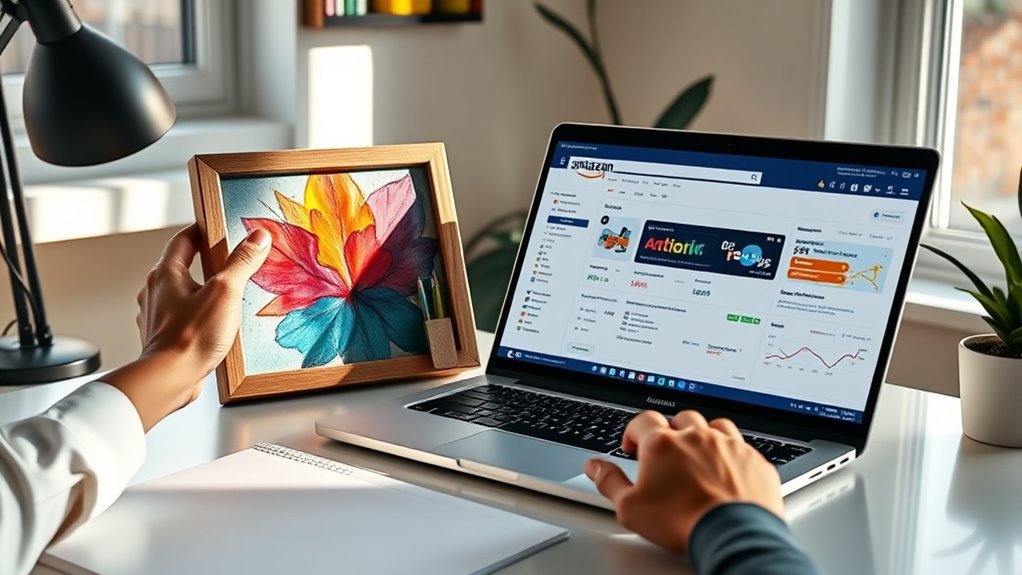
Before you can start selling your art on Amazon, you need to create a professional seller account. Head to Amazon Seller Central and select “Register” to begin. You’ll register as a seller by entering your legal business details and contact information.
Don’t forget to verify your email through the OTP Amazon sends you to activate your account. Next, choose the Amazon seller plan that fits your needs—opt for the Professional plan if you plan on high-volume sales.
Then, create your Amazon store by completing your profile setup. Add your store name, logo, and bio to boost your store branding.
Make sure to provide your bank and tax info to comply with Amazon’s requirements. Once your account is ready, you’re all set to master the art listing process and showcase your artwork professionally.
Choose the Right Art Products to Sell
With your professional Amazon seller account set up, the next step is deciding which art products to offer. Focus on art types that suit your skills and the art platform’s audience.
Digital art and print-on-demand items offer scalability and low upfront costs, while original artworks may bring higher art profitability but need more effort. Keep an eye on market trends to pick art to sell that aligns with demand.
| Art Product Type | Emotional Appeal |
|---|---|
| Digital Art | Freedom to create & sell endlessly |
| Print-on-Demand | Easy, flexible, and diverse |
| Original Art | Unique, authentic, personal |
Choosing the right art products ensures your art business thrives with compelling product listings and strong sales. So, take your time and pick what feels right for you!
Craft Compelling and Optimized Product Listings
How can you make your art stand out in Amazon’s crowded marketplace? Start by crafting compelling product descriptions that combine engaging storytelling with essential details like size, materials, and care instructions.
Use SEO optimization through thorough keyword research to create titles and descriptions that boost your search rankings. Incorporate these keywords naturally not only in your text but also in image file names, captions, and alt text.
Showcase your artwork with high-quality images and professional artwork photography that display multiple angles and scale, enticing buyers visually.
Regular listing optimization is vital—keep analyzing customer feedback and keyword performance to make listing updates that improve visibility and conversion rates. This careful attention guarantees your art listings attract more views and sales consistently.
Set Competitive Pricing and Shipping Options
What determines a buyer’s decision besides the artwork itself? Competitive pricing and shipping options play a huge role.
To set the right product pricing, research similar art on Amazon and factor in referral fees (usually 5%-20%) during your price calculation. Don’t forget to include shipping costs to protect your profit margin.
Consider these tips:
- Choose a fulfillment method: Amazon FBA simplifies shipping but impacts costs; self-fulfillment offers control but requires effort.
- Use Amazon’s shipping calculator to estimate and incorporate shipping costs accurately.
- Offer flexible shipping options to cater to different buyer preferences.
- Highlight free shipping promotion to attract more buyers and boost sales volume.
Balancing these elements helps you price your art competitively while meeting customer expectations.
Promote Your Art and Grow Your Amazon Store
Why settle for just listing your art when you can actively promote it to boost sales? To promote your art effectively, use Amazon Sponsored Product ads to increase visibility and improve search rankings.
Leverage social media platforms like Instagram and Pinterest by sharing high-quality images, behind-the-scenes content, and themed boards that engage potential buyers.
Make sure your product titles and descriptions include relevant keywords to enhance discoverability. Collaborate with influencers to expand your reach and build credibility.
Running promotions and giveaways generates excitement and attracts more followers. Don’t forget to include Amazon store links in your social bios and profiles to make purchasing easy for your audience.
These strategies will help you grow your Amazon store and turn browsers into loyal customers. It’s all about making your art easy to find and hard to resist!
Frequently Asked Questions
Is It Worth Selling Art on Amazon?
Yes, it’s worth selling art on Amazon because you can reach millions, reduce costs, and use powerful marketing tools.
You’ll boost visibility and potentially earn steady income by tapping into a massive, engaged customer base.
Plus, Amazon’s platform makes it easier to manage sales and connect with buyers who are actively looking for unique pieces.
How to Make up to $10,000 per Month on Amazon Without Selling Physical Products?
You can make up to $10,000 monthly by selling digital art or print-on-demand products. Optimizing your listings with SEO is key to getting noticed.
Using Amazon ads helps drive more traffic to your products. Plus, leveraging social media can boost your reach even further.
Don’t forget to scale through multiple categories and platforms like Printify or Gelato. It’s all about diversifying and expanding your options.
How Much Does Amazon Take From a $100 Sale?
Amazon typically takes about $15 from a $100 sale in referral fees for art.
If you use Fulfillment by Amazon, expect additional fees. Plus, there’s a $39.99 monthly seller fee if you’re a professional seller.
How to Sell on Amazon Step by Step for Beginners?
Think of selling on Amazon like planting a garden: you start by creating your seller account, choose your products, list them with clear details.
Next, connect fulfillment, then promote your “flowers” to bloom sales. It’s a step-by-step growth.
Just take it one step at a time, and before you know it, your sales will start to grow!
Conclusion
If you follow these five simple steps, selling art on Amazon will feel like opening a treasure chest of endless opportunities. You won’t just reach buyers—you’ll captivate an audience hungry for your creativity.
Imagine your art flying off virtual shelves faster than you can create it! With the right approach, your Amazon store won’t just grow; it’ll explode into a thriving masterpiece of success.
So, plunge in and watch your art empire soar! By mastering how to sell art on Amazon, you open doors to a global audience eager for unique pieces. Selling art on Amazon can transform your passion into profit and build a flourishing online art business. Start today, and see your art business thrive like never before!