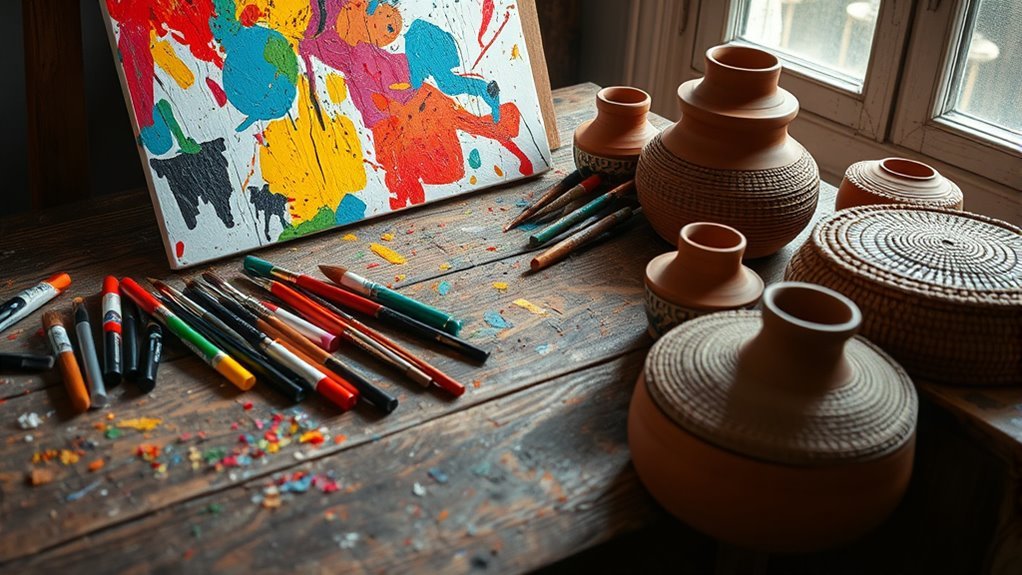
How to Understand the Difference Between Art and Craft
To understand the difference between art and craft, it’s important to know what each really means. Art focuses on expressing original emotions and ideas. It aims to evoke feelings through creativity and personal expression.
Craft, on the other hand, emphasizes skilled creation. It’s about mastering materials and often involves practical use or decoration.
Both art and craft need talent and a personal touch, but they highlight different things.
Art usually puts a spotlight on uniqueness and originality, while craft centers more on technique and function.
Curious about how these differences shape creative work? There’s plenty more insight to explore.
Key Takeaways
- Art focuses on originality, personal expression, and evoking emotional responses through creative ideas. It’s all about making something unique that speaks to people on a deeper level.
- Craft emphasizes technical mastery, tradition, and producing functional or decorative objects. It’s more about skill and creating things that serve a purpose or look beautiful.
- Art is often unique or limited in reproduction, highlighting creative and aesthetic impact. You usually won’t find exact copies of an artwork.
- Craft values the process, skillful creation, and objects meant for practical use. The way something is made and how well it’s done really matters here.
- Cultural context and reproducibility affect how art and craft are perceived and distinguished. So, where you come from and how something is made can change how you see it.
Defining Art and Craft: Key Characteristics
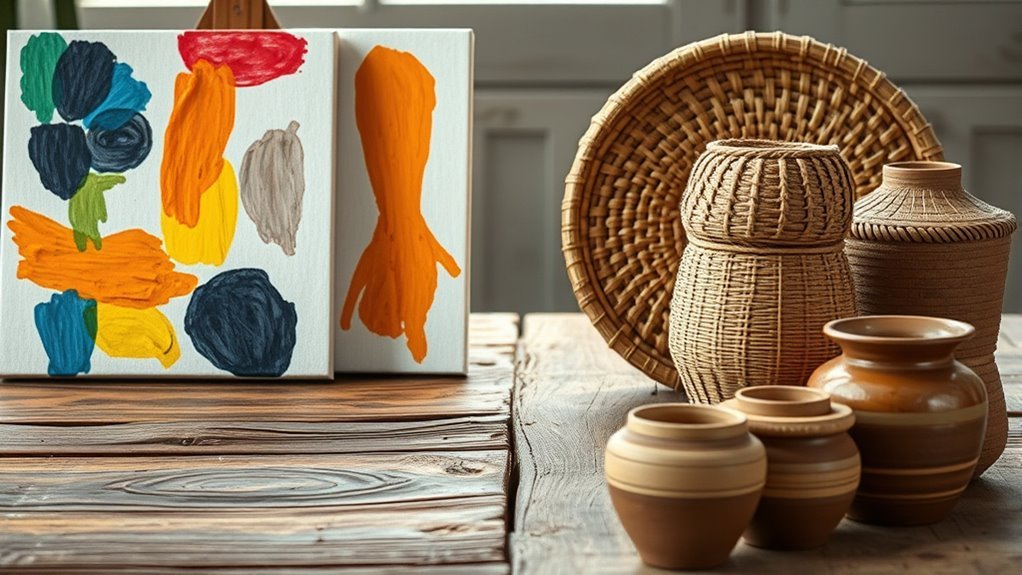
Although art and craft often overlap, they have distinct characteristics you should understand. Art in the visual arts focuses on originality and personal expression, aiming to evoke emotional responses through creativity and unique concepts.
Art emphasizes originality and personal expression, seeking to evoke emotions through creative and unique ideas.
You’ll find that art often exists as one-of-a-kind pieces or limited reproductions, highlighting its originality. Craft, on the other hand, emphasizes craftsmanship, mastery of materials, and tradition.
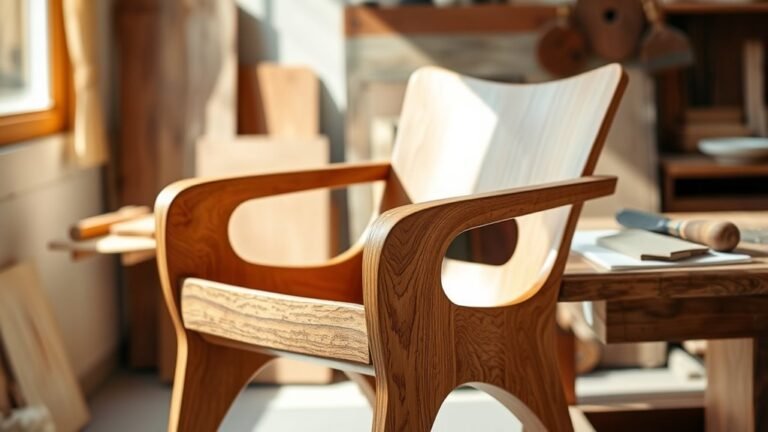
It prioritizes functionality, producing skillfully made objects like ceramics or textiles meant for practical use. While both require creativity and mastery, craft deeply values the process and techniques passed down through tradition.
When you explore these differences, you’ll see how art celebrates aesthetic and emotional impact, whereas craft centers on utility and expert skill.
Exploring the Overlap and Distinctions Between Art and Craft
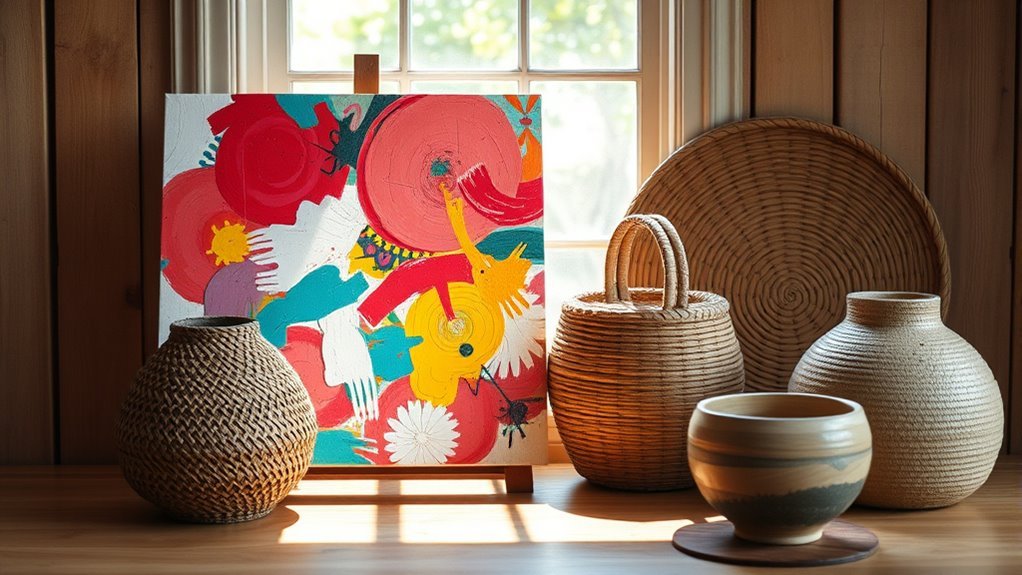
Understanding the distinct traits of art and craft sets the stage for recognizing how they often blend in practice. When you explore visual arts and decorative arts, you’ll see both emphasize mastery and personal expression.
Yet, art typically conveys emotional or conceptual meaning, while craft often centers on skillful creation with a clear purpose, like functionality or decoration. However, reproducibility challenges these lines—mass-produced items can be both art and craft.
Your perception plays a big role, influenced by cultural and historical context. So, while art and craft have unique qualities, their overlap reveals how flexible these categories are.
You learn that the distinction isn’t always clear, and appreciating both enriches your understanding of creative work.
Frequently Asked Questions
What Differentiates Art From Craft?
You differentiate art from craft by focusing on intent and function; art expresses emotions and originality, while craft emphasizes skill, technique, and practical use.
You’ll notice art aims to evoke feelings, craft serves everyday purposes.
Are Art and Craft the Same Thing?
You won’t see art as just craft, nor craft as only art—they contrast personal expression with skillful function.
Still, they blend and overlap, so you’ll find their lines blur depending on purpose and perspective.
What Are the Five Different Types of Arts and Crafts?
You’ll find five types: visual arts like painting, literary arts such as poetry, performing arts including dance, decorative arts like weaving, and applied arts covering pottery and jewelry.
Each offers unique creative expression you can explore. It’s pretty cool how they all let you show yourself in different ways.
Are Crafts Considered Art?
Of course, crafts aren’t art—said no one who’s seen a master potter’s work.
You’ll find crafts are art when skill, creativity, and expression shine, proving function and beauty often walk hand in hand.
Conclusion
Now that you’ve seen how art sparks emotion and craft shapes function, you can appreciate their unique roles. While art invites you to feel and interpret, craft asks you to create and use.
They overlap in creativity but stand apart in purpose. Understanding this difference helps you value both, whether you’re drawn to the expressive freedom of art or the skillful precision of craft.
Embrace both—they’re two sides of the same creative coin. Recognizing the difference between art and craft enriches your appreciation and encourages you to explore your own creative talents, whether through emotional expression or practical skill. So go ahead, dive into the world of art and craft, and enjoy the unique satisfaction each brings!