3 Easy Doodle Art Things to Draw When Bored
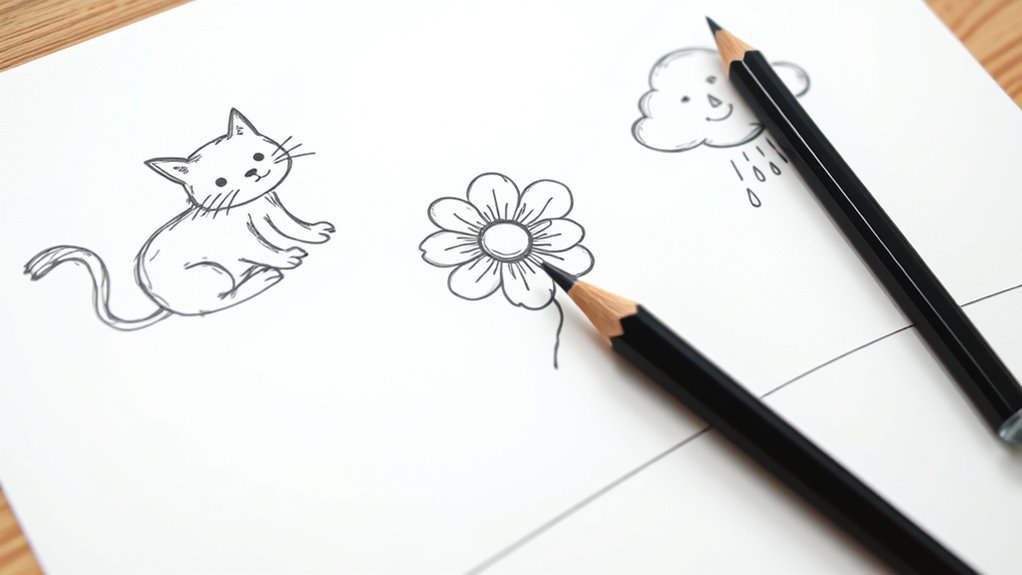
When boredom strikes and you’re looking for easy doodle art things to draw, why not start with some cute animal faces? Sketch simple circles and add tiny details like whiskers and blush to create adorable cats or pandas. It’s a fun way to pass time and get those creative juices flowing.
You can also doodle easy nature elements like fluffy clouds, suns, or crescent moons using basic shapes and lines. These simple drawings are quick to do and can brighten up any page.
Another fun option is everyday objects — think cups or keys broken down into simple forms. These quick doodles not only boost creativity but also help relax your mind. Keep exploring, and you’ll discover even more simple, charming ideas to make your boredom disappear.
Key Takeaways
– Draw cute animal faces like cats or bunnies using simple shapes and minimal details for quick and charming doodles.
It’s a fun way to create something adorable without too much effort.
– Sketch simple nature elements such as fluffy clouds, suns, or flowers with basic circles and curved lines for relaxing art.
These shapes are easy to play with and perfect for a calming drawing session.
– Doodle everyday objects like cups or keys by breaking them down into circles, rectangles, and triangles for easy sketching.
This method helps you see things in a simpler way, making sketching less intimidating.
– Use basic geometric shapes as a foundation and add small details to keep doodles simple yet expressive and fun.
Playing around with shapes lets your creativity flow while keeping things manageable.
– Focus on speed and simplicity to enjoy doodling as a creative, boredom-busting activity that boosts drawing skills.
The more you doodle, the better and more confident you’ll get, so just keep it light and enjoyable!
Cute Animal Faces
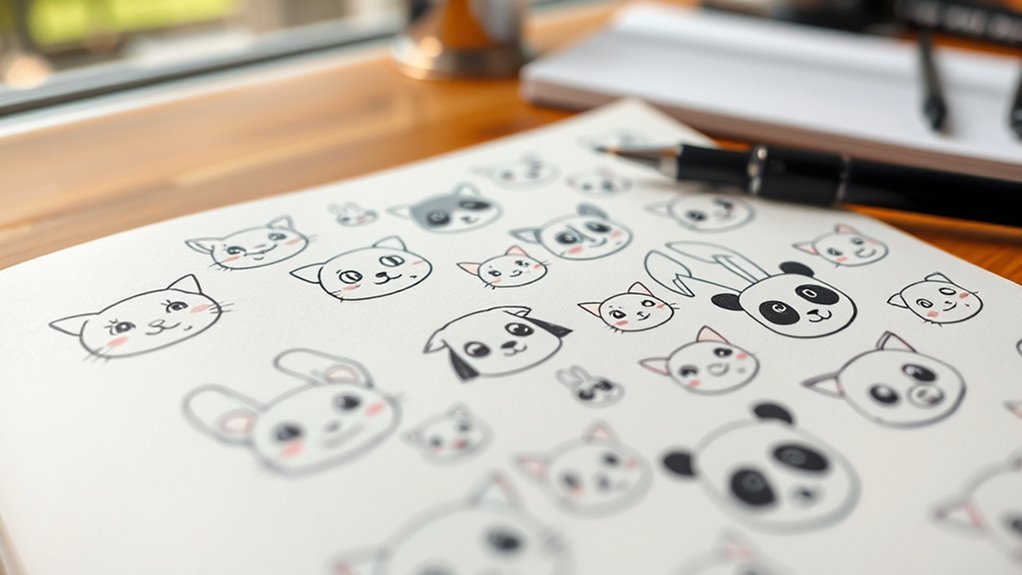
Drawing cute animal faces is a fun way to pass the time when you’re bored. You can create adorable doodles by starting with simple shapes like circles and ovals, making easy drawing quick and enjoyable.
These simple doodles form the base for cute animal faces like cats, dogs, pandas, and bunnies. They’re all fun to draw because of their charming features.
Adding tiny details—whiskers, blush marks, or small ears—makes your doodle ideas even more appealing. Plus, experimenting with different facial expressions such as happy, surprised, or sleepy gives each face a unique personality.
If you love drawing, cute animal faces offer endless fun and quick doodle opportunities. Honestly, these animal faces are perfect drawing ideas to brighten your day whenever boredom strikes.
Simple Nature Elements
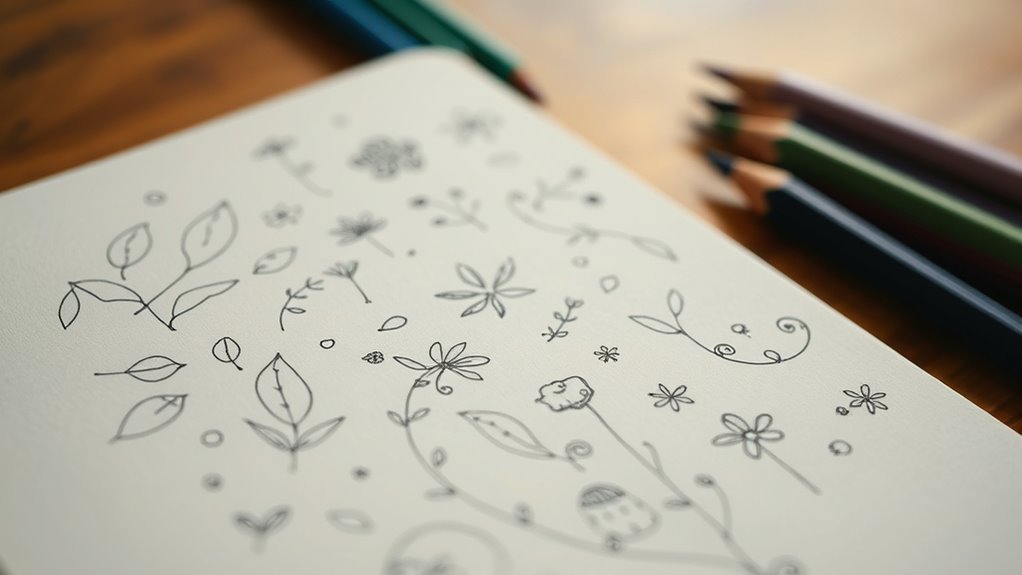
Although simple, nature elements like flowers, leaves, clouds, the sun, and the moon offer endless doodling possibilities that are quick and satisfying to create. You can sketch basic flowers using simple shapes—circles for centers and elongated ovals for petals—to make easy drawings like daisies or tulips.
Nature’s simple elements like flowers, leaves, clouds, sun, and moon inspire endless, quick, and delightful doodling fun.
Leaves are equally straightforward, often drawn with curved lines and pointed tips. For clouds, try fluffy, rounded shapes that range from simple puffs to layered formations, adding variety to your nature sketches.
The sun, a circle with radiating lines or zigzags, brings warmth to your doodles, while the moon—whether crescent or full with craters—adds calm celestial elements, especially when paired with stars.
These simple nature elements are perfect for quick, charming doodles that brighten your day. Give them a try and see how fun and relaxing it can be!
Everyday Objects

Everyday objects like cups, pens, and keys offer a great way to sharpen your observational skills and speed up your sketching.
When you focus on drawing these relatable items, you can break them down into simple shapes like circles, rectangles, and triangles. This approach makes quick sketching easier and more enjoyable.
By including minimal details, you create relaxing doodles that capture each object’s essence without overcomplicating your lines.
Practice drawing everyday objects from different angles to boost your spatial awareness and improve versatility in your doodles.
Using familiar items not only makes your practice more fun but also builds your confidence as you see progress.
Frequently Asked Questions
Is Doodling ADHD?
Doodling isn’t ADHD itself, but it’s a helpful tool if you have ADHD. It can boost your focus, calm restlessness, and improve memory.
Just be mindful it doesn’t become a distraction while you use it. Keep it balanced, and it can really make a difference!
What Are 100 Easy Things to Draw When You’re Bored?
You can draw flowers, stars, hearts, smiley faces, coffee cups, books, cats, dogs, moons, suns, clouds, trees, fruits, simple patterns, geometric shapes, houses, cars, food items, emojis, and cute animals to keep boredom away creatively.
Why not start with something simple like flowers or stars? They’re easy and fun to sketch.
Or maybe try drawing some smiley faces or coffee cups. They’re great for practicing expressions and shapes.
If you like animals, cats and dogs are always adorable to doodle. And don’t forget the moon, sun, and clouds – perfect for a quick nature scene.
Trees and fruits can add a fresh vibe to your drawings. Plus, simple patterns and geometric shapes are awesome for getting creative.
Feel like mixing it up? Houses, cars, and food items can be super fun to sketch too.
Emojis and cute animals are also great go-tos when you want to keep things light and playful. Drawing can really chase boredom away!
What Are Some Easy Doodles I Can Draw?
You can doodle simple flowers, stars, or cute animals using basic shapes like circles and triangles. Try drawing repetitive patterns like stripes or dots, or sketch easy objects like hearts, moons, or cups to pass time creatively.
It’s a fun way to relax and get creative without much effort. Plus, you don’t need any fancy tools—just a pen and some paper! Give it a try and see what you come up with.
What Should a 12 Year Old Draw When Bored?
When boredom clouds your mind like a fog, grab your pencil and draw fun cartoon characters, animals, or your favorite hobbies.
Let your imagination soar with fantasy creatures or everyday scenes to brighten your day and skills!
Drawing can be a cool way to pass time and express yourself. So why not give it a try?
Conclusion
Next time you’re bored, grab a pen and try doodling cute animal faces, simple nature elements, or everyday objects. Did you know that doodling can boost your memory retention by up to 29%? It’s a fun and easy way to relax while keeping your brain active.
So don’t hesitate—start doodling now and watch how these simple sketches brighten your mood and sharpen your focus in no time! Whether you’re sketching animals, plants, or things around you, doodle art is a great way to pass the time. Plus, it’s an enjoyable, stress-free activity that can improve your creativity and concentration.
Give these easy doodle art ideas a try whenever boredom strikes. You’ll be surprised how much fun and relaxation come from just a few simple strokes on paper!