How to Become an Art Dealer in 7 Essential Steps
To become a art dealer, start by getting a solid education in art history and business. This foundation is crucial because understanding both the artistic and commercial sides will help you navigate the market confidently.
Next, gain hands-on experience through internships or roles in galleries or auction houses. This real-world exposure lets you see how deals are made and how art is valued.
Focus on a specific niche and build expertise there. Specializing helps you stand out and become a go-to expert.
Don’t forget to network actively with artists, collectors, and industry pros. These connections are invaluable for finding opportunities and learning about emerging trends.
Develop strong business and sales skills, then launch your own gallery or private dealership. It’s all about combining passion with savvy to succeed.
Keep up with market trends and adapt accordingly. Keep exploring to uncover the detailed steps that will set you apart.
Key Takeaways
- Gain formal education in art history and business to understand art and market dynamics effectively. This foundation helps you grasp both the creative and commercial sides of the art world.
- Acquire practical experience through internships and network extensively with artists, collectors, and dealers. Building relationships is key to opening doors and learning the trade firsthand.
- Specialize in a niche art market and continuously update your expertise through research and events. Staying informed keeps you ahead in this ever-changing industry.
- Build credibility by joining professional associations, attending major art fairs, and engaging online. These steps help establish your reputation and connect you with the community.
- Establish your dealership with a solid business plan, certification, and adapt to market trends using data. Being flexible and informed will help your business thrive over time.
Obtain a Relevant Educational Background

Although passion for art is essential, you’ll need a solid educational background to succeed as an art dealer. Studying art history or fine arts gives you a strong foundation in art periods, movements, and key artists. This knowledge is vital when evaluating pieces.
Complementing this with courses in business, marketing, and economics equips you to navigate the art market efficiently. Many top dealers begin their education at specialized institutions like Sotheby’s Institute of Art. Doing so helps them gain credibility with clients and artists alike.
Staying current is just as important, so actively engage in seminars, workshops, and industry publications to track evolving art trends. This continuous education guarantees you make informed decisions and build trust. It’s a key factor to help you thrive in the competitive art industry.
Gain Practical Experience in the Art Industry
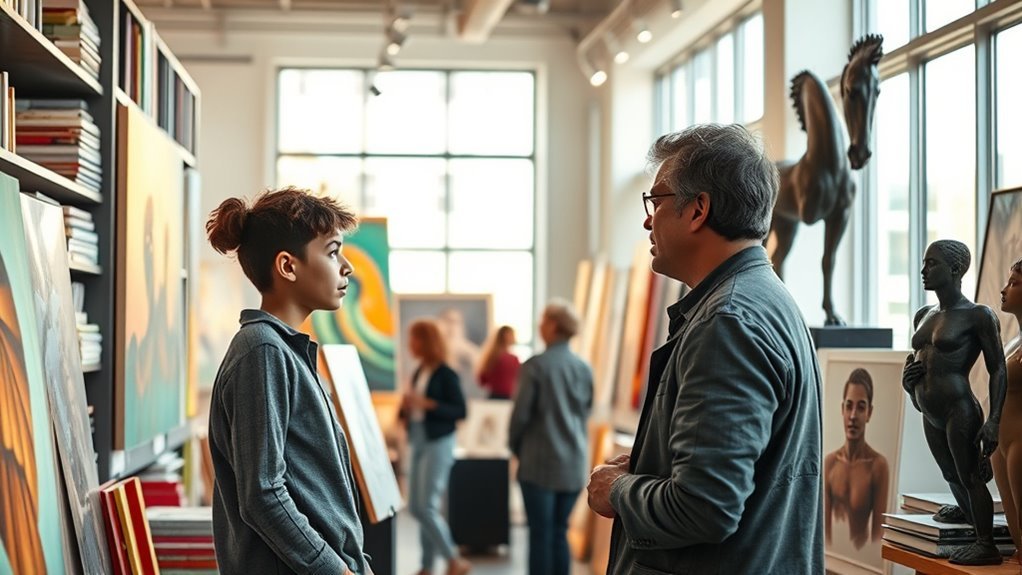
Start by seeking internships or entry-level positions at galleries, auction houses, or museums to get hands-on experience. Focus on building relationships through networking at art fairs and industry events.
Don’t hesitate to reach out to established dealers for mentorship and guidance. It’s a great way to learn from those who’ve been in the business longer than you. Plus, they can offer valuable advice and connections.
Internship Opportunities
Where can you gain the hands-on experience needed to thrive as an art dealer? Internships are your gateway to understanding the art market and developing essential art experience. Many successful art dealers started as gallery or curatorial interns, learning the ropes firsthand.
Here are four key internship opportunities to consider:
- Galleries – Work alongside art dealers managing sales and artist relations.
- Auction Houses – Learn about art appraisal and sales strategies under expert guidance.
- Museums – Gain insight into curation and inventory management.
- Specialized Programs – Receive focused training in market operations and art valuation.
Early internships can also connect you with mentors and industry professionals. These relationships often shape your future success in the art world. So, jumping in early really makes a difference!
Entry-Level Positions
How can you build the practical skills needed to succeed as an art dealer? Start with entry-level roles like a gallery assistant or internship at galleries, auction houses, or museums. These positions immerse you in sales, client relations, art handling, and market analysis.
You’ll gain hands-on experience with cataloging, organizing exhibitions, and marketing, while learning appraisal and provenance research. This practical exposure sharpens your art evaluation and negotiation skills, critical for art dealing success.
| Role | Key Tasks | Skills Developed |
|---|---|---|
| Gallery Assistant | Sales, client relations | Art handling, negotiation |
| Internship | Cataloging, exhibition support | Market analysis, marketing |
| Auction House Staff | Appraisal, provenance research | Evaluation, market trends |
Entry-level positions lay a strong foundation for your art dealer career.
Networking Strategies
Although gaining practical experience is essential, building a strong network in the art industry will open doors you might not find otherwise. Effective networking connects you with key players and opportunities.
Here’s how to start:
- Attend art fairs and industry events regularly to meet artists, collectors, and curators in person.
- Join professional associations like the Art Dealers Association of America (ADAA) for exclusive networking opportunities and resources.
- Intern at galleries, auction houses, or museums to gain firsthand experience and build relationships.
- Use social media platforms such as Instagram and LinkedIn to showcase your expertise and engage with industry professionals.
These strategies will help you create meaningful connections and position yourself as a knowledgeable art dealer ready to grow in the market.
Develop a Specialized Area of Expertise

When you develop a specialized area of expertise, you position yourself as a trusted authority in the art world. Focus on a specific niche like an art period, medium, or movement to build deep knowledge.
Developing a specialized expertise establishes you as a trusted authority in the art world.
Study art history, market trends, and authenticating techniques related to your specialization to navigate the art market confidently. Attend specialized industry events, exhibitions, and auctions to stay current and immerse yourself in your chosen field.
Curate collections or organize shows highlighting your focus to establish credibility and attract clients. Keep updating your specialized expertise by following the latest research, emerging artists, and shifts in the art market.
This focused approach helps you stand out and gain respect within your niche. It’s all about becoming the go-to person people trust and seek out.
Build a Strong Professional Network
To build a strong professional network, start by attending art fairs, exhibitions, and industry events where you can meet artists, collectors, and curators. Connect directly with artists to foster meaningful relationships and stay active within the community.
Joining professional associations like the Art Dealers Association of America will also give you access to valuable opportunities and insights. It’s all about being present and engaged. Keep reaching out and showing up!
Attend Art Events
Attending key art events like Art Basel and Frieze connects you directly with collectors, artists, and gallery owners from around the world. These art events are essential for expanding your network and gaining industry credibility.
To make the most of these opportunities, participate in gallery openings and panel discussions to meet influential market players. It’s a great way to get your foot in the door and start building meaningful relationships.
Also, consider joining professional associations such as the Art Dealers Association of America. This can really boost your credibility and open up new avenues for collaboration.
Don’t forget to regularly attend local and international exhibitions. Staying updated on trends helps you embed yourself in the art community and keeps your knowledge fresh.
Finally, use social media platforms like Instagram and LinkedIn. Engaging with a diverse network of artists and collectors globally can expand your reach beyond physical events.
Connect With Artists
Building a strong professional network starts by connecting directly with artists at openings, gallery events, and industry fairs. These in-person opportunities are vital for genuine networking and understanding artists’ work firsthand.
Make time for studio visits to dive deeper into their creative process and offer thoughtful feedback, which helps build trust and rapport. Don’t underestimate the power of social media; follow and engage with artists on platforms like Instagram and LinkedIn to stay updated and maintain ongoing conversations.
Join Professional Associations
While connecting directly with artists is essential, joining professional associations like the Art Dealers Association of America (ADAA) can substantially elevate your credibility and expand your access to valuable industry resources.
By becoming a member, you tap into a robust network that supports your growth and reputation. Here’s how professional associations help:
- Boost your credibility through recognized certification and accreditation programs.
- Provide exclusive networking opportunities with established dealers, curators, and collectors worldwide.
- Host events, seminars, and exhibitions to keep you updated on market trends.
- Enhance your reputation and trustworthiness among clients and partners.
Joining such groups not only strengthens your professional network but also positions you as a trusted art dealer in the competitive market.
It’s a smart move that can really pay off in the long run.
Acquire Essential Business and Sales Skills
To succeed as an art dealer, you’ll need to master essential business and sales skills that go beyond a passion for art. Start by developing expertise in art appraisal to accurately assess an artwork’s value and authenticity.
Hone your negotiation skills to secure fair deals while maintaining strong client relationships. Effective client management is vital; you’ll build trust and encourage repeat business by understanding your clients’ tastes and investment goals.
Grasp market economics to navigate pricing trends, supply and demand, and financial cycles within the art world. Combine these skills with targeted marketing and clear communication to position yourself as a knowledgeable, reliable dealer.
Your ability to manage these business aspects will be the foundation of a successful art dealership. It’s not just about loving art — it’s about knowing the business inside and out.
Establish Your Own Gallery or Private Dealership
Mastering business and sales skills sets the stage for establishing your own gallery or private dealership. To succeed in the competitive art market, you need a clear roadmap.
Follow these essential steps:
- Develop a thorough business plan that defines your art gallery’s niche, target audience, and financial projections.
- Secure a location with high visibility and accessibility, ideally near art districts or cultural hubs.
- Curate exhibitions thoughtfully to build your gallery’s identity and attract artists, collectors, and press.
- Invest in marketing strategies like social media, gallery openings, and art fairs to enhance your presence.
Building strong relationships with artists and collectors will help you generate quality inventory and clientele. By taking these steps, you position yourself among successful art dealers in the evolving art market.
Stay Informed and Adapt to Market Trends
How do successful art dealers keep their edge in a constantly evolving market? They stay informed by regularly reviewing industry publications like Artforum, Art in America, and Artsy to track emerging market trends.
Attending international art fairs such as Art Basel and TEFAF helps you observe collector preferences and new artist developments firsthand. Use online platforms and social media analytics to monitor trending styles and demand in real-time.
Keep an eye on economic indicators and cultural shifts since these heavily influence the art market’s pricing and collecting patterns. To thrive, you must adapt your inventory and marketing strategies based on data-driven insights into buyer behavior and technological advancements.
Staying proactive guarantees you remain competitive and responsive in this dynamic field. So, keep learning and adjusting as the market changes—it’s the best way to stay ahead.
Frequently Asked Questions
What Are the Steps to Becoming an Art Dealer?
You’ll want to study art or business, gain hands-on experience, and specialize in an art niche.
Networking extensively is key, too. It really helps to build connections in the art world.
Finally, plan carefully and launch your own gallery or dealership. Curate compelling exhibitions that attract buyers and make your space stand out.
What Is the 70/30 Rule in Art?
The 70/30 rule splits sales so you, as the dealer, snag 70%, and the artist gets 30%. This standard structure supports straightforward, fair sharing.
It sets solid, sensible selling situations between sellers and artists. It’s pretty much a win-win for everyone involved.
How Much Money Do Art Dealers Make?
You can make anywhere from $30,000 to millions annually as an art dealer, depending on your experience, location, and clients. Many start lower but boost earnings through commissions, private sales, and consulting services.
It’s really about building your network and reputation over time. The more connections and expertise you have, the better your chances of landing high-value deals. Plus, some dealers earn a steady income by offering advice and managing collections for clients.
What Is the Most Profitable Art to Sell?
Think of blue-chip masterpieces like Picasso or Warhol as golden tickets—they’re the most profitable art to sell.
You’ll also want to explore emerging artists, limited editions, and digital NFTs, where hidden treasures can skyrocket your earnings.
Conclusion
Becoming an art dealer means learning continuously, building connections confidently, and specializing passionately. It means gaining hands-on experience, mastering sales skills, and staying ahead of market trends.
Whether you choose to open your own gallery or work privately, success comes from dedication, adaptability, and a love for art. Keep growing your knowledge, expanding your network, and honing your expertise.
Because your journey as an art dealer starts with commitment and thrives with persistence. To truly succeed, focus on building strong relationships and understanding the art market deeply. Becoming an art dealer requires passion, patience, and a willingness to evolve constantly. Keep at it, and your career in art dealing will flourish.