How to Become an Art Therapist in 10 Essential Steps
To become an art therapist, you’ll first need to earn a bachelor’s degree in art, psychology, or a related field. This will help you build a strong foundation and a diverse portfolio that showcases your creativity and understanding of human behavior.
Next, complete the prerequisite courses required for graduate study. After that, enroll in an accredited master’s program focused on art therapy. This specialized training is key to developing the skills necessary for effective therapy.
You’ll also need to finish supervised clinical hours to gain hands-on experience.
Then, apply for the Registered Art Therapist (ATR) certification and obtain state licensure, which are essential for professional practice.
Staying current through ongoing education helps you maintain your competence and keep up with new developments in the field.
Keep reading to discover the essential steps that will guide your successful journey to becoming an art therapist.
Key Takeaways
- Earn a bachelor’s degree in art, psychology, or a related field with foundational art and psychology coursework. This sets the groundwork for your future studies and career.
- Build a diverse art portfolio showcasing versatility and personal themes to support graduate applications. A strong portfolio really helps you stand out.
- Complete a master’s program in art therapy including supervised practicum (100+ hours) and clinical internship (600+ hours). These hands-on experiences are crucial for developing real-world skills.
- Obtain certification (e.g., ATR) by documenting supervised hours, submitting transcripts, and passing certification exams. Certification validates your expertise and professionalism.
- Engage in continuing education and professional networking to maintain licensure and enhance therapeutic skills. Staying connected and learning keeps you sharp in your practice.
Understand the Role and Responsibilities of an Art Therapist

Although you might not realize it, art therapists play an essential role in mental health by blending creative art-making with psychotherapy to help clients express feelings that are hard to put into words.
As an art therapist, you’ll use art therapy techniques in clinical practice to support individuals facing emotional or psychological challenges. Your role involves developing tailored treatment plans and observing clients’ creative expression to gain insights into their mental health.
You’ll work in diverse settings like hospitals, schools, and community organizations, fostering a safe space for clients to explore their thoughts visually when verbal communication falls short.
Collaborating with other healthcare professionals is critical, ensuring a holistic approach to treatment.
Understanding these responsibilities is fundamental before pursuing this rewarding career path.
Earn a Bachelor’s Degree in Art, Psychology, or a Related Field

Before you can pursue graduate studies in art therapy, you’ll need to earn a bachelor’s degree in art, psychology, or a related field. Many undergraduate programs offer coursework in studio art, psychological development, and general education, helping you build a solid foundation.
While some schools provide specific art therapy undergraduate programs, they’re not required for graduate admission. Focusing on psychology or art ensures you grasp the core concepts essential for your future career.
Undergraduate art therapy programs aren’t mandatory; prioritize psychology or art to master key foundational concepts.
During your bachelor’s degree, aim to engage in internships or volunteer work to gain relevant experience. This hands-on involvement, combined with your academic background, will prepare you for advanced study and professional certification in art therapy.
Choosing the right undergraduate program sets the stage for your success in this rewarding field. So, take the time to explore your options and find the best fit for you.
Develop a Diverse Portfolio Showcasing Your Artistic Skills

You’ll want to create a portfolio with a variety of art media that highlights your versatility and technical skills. Focus on personal themes that show your ability to use art for self-reflection and healing.
Remember to document your creative process, emphasizing growth over perfection to capture your development as an artist. It’s all about showing how you evolve, not just the final product.
Variety of Art Media
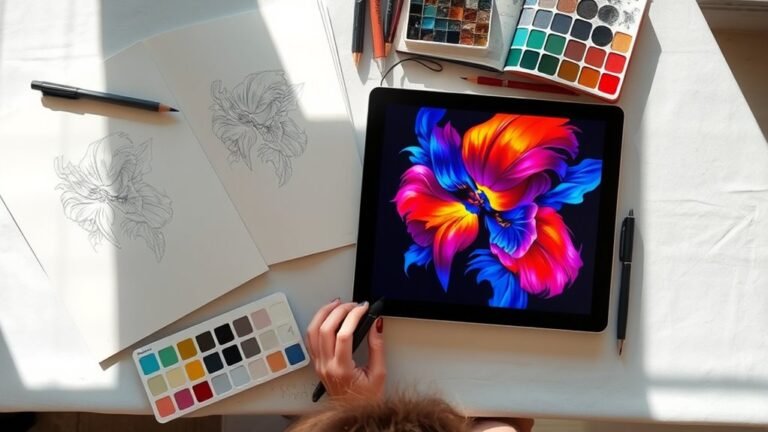
When building your art therapy portfolio, incorporating a variety of media such as drawing, painting, digital art, and sculpture helps demonstrate your versatility and adaptability. Using diverse art media allows you to showcase different forms of artistic expression and highlights your understanding of the creative process.
Focus on the quality of your artistic development by emphasizing reflection, experimentation, and growth rather than technical perfection. Document each piece with high-quality images and include brief descriptions that explain your artistic intentions.
Regularly updating your art therapy portfolio with new works illustrates your ongoing commitment to expanding your skills and familiarity with various media. This variety not only enriches your portfolio but also prepares you to meet the diverse needs of clients in your future art therapy practice.
Personal Artistic Themes
How do your personal experiences and emotions shape the art you create? Your personal artistic themes are the heart of a compelling art therapy portfolio.
To showcase artistic versatility, include 15–20 pieces that highlight emotional expression through diverse media—drawing, painting, digital art, and sculpture. These works should reflect your unique experiences and cultural influences, revealing depth and authenticity.
Emphasizing creative exploration in your portfolio aligns with art therapy’s focus on healing through art. Regularly update your collection to demonstrate growth and adaptability, ensuring it captures your evolving style and thematic interests.
Process Over Perfection
Although technical perfection can be impressive, art therapy portfolios gain strength from showcasing your creative process and emotional depth. Focus on developing a diverse art therapy portfolio with 15-20 pieces that highlight your range of media—drawing, painting, digital art, or sculpture.
Prioritize artworks that reveal your reflective practice and personal themes. This shows your ability to use art as a therapeutic tool.
This approach emphasizes creative growth over polished perfection, which admissions panels really value for professional development. Make sure to update your portfolio regularly to reflect your evolving skills and emotional insight.
That way, it accurately represents your readiness for art therapy. By centering your process, you’ll create a compelling portfolio that speaks to both your artistic journey and your potential as an empathetic, adaptable art therapist.
Research and Select an Accredited Master’s Program in Art Therapy
Since your choice of graduate program shapes your training and career opportunities, you should carefully research and select an accredited master’s program in art therapy that meets standards set by recognized bodies like CAAHEP. Look for accredited programs offering thorough art therapy coursework covering theory, ethics, assessment, and multicultural competency.
Verify the inclusion of a supervised practicum with at least 100 hours and a clinical internship totaling 600 hours to gain practical experience. Also, examine faculty experience to ensure quality mentorship and support during your training.
When researching programs, consider these key factors:
- Accreditation status and curriculum depth in art therapy coursework
- Required supervised practicum and clinical internship hours
- Faculty experience and program format options fitting your learning style
This guarantees you’re well-prepared for a successful art therapy career.
Complete Prerequisite Courses in Psychology and Studio Art
You’ll need to complete foundational psychology courses like developmental and abnormal psychology to prepare for graduate art therapy programs. At the same time, build your studio art skills by taking classes in various media such as drawing, painting, and sculpture.
Choosing the right combination of these courses will strengthen both your knowledge and your portfolio for admission. It’s all about balancing theory with hands-on experience to make a strong application.
Psychology Course Foundations
Why should you focus on completing prerequisite courses in psychology and studio art before applying to graduate art therapy programs? These courses build your foundation, ensuring you understand both psychological concepts and artistic techniques crucial for the field.
Specifically, you’ll need to complete psychology prerequisites like developmental psychology and abnormal psychology to grasp human growth and mental health conditions.
You’ll also want to take undergraduate coursework that includes 3-6 relevant classes covering core psychological theories and clinical assessment principles.
On the art side, studio art methods across multiple media—such as drawing, painting, and sculpture—are important to develop your creative skills and prepare a diverse portfolio.
This blend of coursework equips you with essential knowledge and practical experience, making you a competitive candidate and readying you for advanced study in art therapy.
Studio Art Techniques
How can mastering various studio art techniques enhance your preparation for a career in art therapy? Completing prerequisite courses in drawing, painting, and composition equips you with essential skills to guide clients in expressing emotions creatively.
These studio art classes teach diverse art techniques, building your confidence across multiple media, which is *vital* in therapy. Your proficiency not only supports clients’ personal insight but also strengthens your graduate school portfolio.
Combining this with psychology courses forms a solid foundation for effective practice.
| Skill Developed | Emotional Impact |
|---|---|
| Drawing | Expresses hidden feelings |
| Painting | Releases emotional tension |
| Composition | Organizes chaotic thoughts |
| Color Theory | Communicates mood shifts |
| Multi-media Art | Encourages creative freedom |
Course Selection Strategy
Although steering course requirements can feel overwhelming, strategically completing prerequisite psychology and studio art classes sets a strong foundation for your art therapy career.
To meet admission standards and excel in graduate coursework, focus on these key steps:
- Complete essential psychology courses like developmental and abnormal psychology to satisfy prerequisite requirements for art therapy programs.
- Enroll in diverse studio art classes—drawing, painting, digital art, sculpture—to build skills for portfolio development.
- Maintain strong coursework performance in both psychology and studio art to boost your GPA and competitiveness.
Balancing these courses thoughtfully guarantees you fulfill prerequisites while refining your art practice, demonstrating readiness for advanced training.
This strategic approach will help you transition smoothly into graduate-level art therapy education.
Fulfill Supervised Practicum and Clinical Internship Requirements
Before you can become a certified art therapist, you need to complete a supervised practicum and clinical internship as part of your graduate program. This involves at least 100 hours of supervised practicum experience in a clinical setting, where you’ll gain hands-on exposure to art therapy practice.
Following that, you must accumulate a minimum of 600 clinical internship hours, working directly with clients under professional supervision. These supervised clinical hours are vital for fulfilling certification requirements and developing your skills.
Be sure to maintain detailed documentation of all your supervised work and personal expressive arts therapy sessions. When applying for certification, you’ll also need to submit autobiographical and philosophical statements, along with references, demonstrating your supervised experience and commitment to the field.
Graduate With a Master’s Degree in Art Therapy or a Related Discipline
Completing your supervised practicum and clinical internship sets the foundation, but earning a master’s degree in art therapy or a related discipline is the next step to becoming a qualified art therapist.
A master’s degree in art therapy is essential after your practicum and internship to become a qualified art therapist.
Accredited art therapy programs offer graduate education that covers theories, ethics, multicultural competency, and assessment. You’ll need to meet these certification standards:
- Complete a minimum of 600 hours in a clinical internship alongside 100 practicum hours.
- Develop skills through coursework and specialized electives like trauma or family therapy.
- Submit a portfolio and letters of recommendation during admission, demonstrating prerequisites in studio art and psychology.
Apply for Registered Art Therapist (ATR) Certification Through ATCB
Once you’ve earned your master’s degree and completed your supervised practicum and clinical internship, you can apply for the Registered Art Therapist (ATR) certification through the Art Therapy Credentials Board (ATCB). To qualify, you must complete at least 100 hours of supervised practicum and 600 hours of clinical internship in an approved setting.
Your application will include official transcripts, documentation of your supervised hours, a personal autobiographical statement, and three professional references attesting to your clinical skills and ethical practice.
After ATCB reviews and approves your application, you may have to pass an exam or fulfill additional requirements to earn your ATR credential. Obtaining this art therapy certification confirms your professional competence and dedication to ethical art therapy practice.
Obtain State Licensure and Consider Dual Credentials
Although requirements vary by state, obtaining licensure is vital if you want to practice art therapy legally and professionally. Each state has its own regulations, with some requiring a specific art therapy license and others licensing under broader mental health categories.
To secure licensure, you’ll generally need to complete a master’s degree in art therapy or a related field. You’ll also need to accumulate supervised practice through clinical hours as mandated by your state regulation.
Plus, earning the ATR credential from the ATCB is often a must, as many states require it before granting licensure.
Thinking about dual credentials? Combining your ATR with a counseling license like LMHC can really broaden your practice scope. It also enhances your legal standing across different settings.
Make sure to stay informed about your state’s specific licensure rules. That way, you’ll meet all the professional and legal standards without any surprises.
Engage in Continuing Education and Professional Development
You’ll need to keep up with continuing education to maintain your certification and licensure, often through workshops and webinars. Professional organizations offer great opportunities to expand your skills and stay current with best practices.
Plus, networking at conferences can open doors to new career paths and collaborations. It’s a great way to meet people who share your interests and can support your growth.
Ongoing Learning Opportunities
How do art therapists stay sharp and effective throughout their careers? Ongoing learning opportunities are key to maintaining your skills and certification. You’ll need regular continuing education to meet requirements and stay updated on best practices.
Consider these three effective ways to engage in professional development:
- Attend workshops, webinars, and conferences offered by organizations like AATA and IEATA. These events help you explore new techniques and research.
- Join peer supervision groups or clinical consultations. They provide a space for reflective practice and collaborative growth.
- Pursue specialized certifications in areas such as trauma or medical art therapy. This can deepen your expertise and enhance your marketability.
Professional Certification Maintenance
Building on ongoing learning opportunities, maintaining your professional certification requires a consistent commitment to continuing education and development. To achieve recertification, you’ll need to complete a set number of CEUs—often around 30 hours—within a five-year period.
These hours can come from workshops, seminars, online courses, or conferences focused on art therapy. Additionally, engaging in supervision or peer consultation plays a vital role in your professional development, helping you stay accountable and informed.
Staying current with new research, techniques, and ethical standards guarantees your practice remains relevant and credible. By prioritizing these activities, you’ll not only meet certification requirements but also enhance your skills and effectiveness as an art therapist.
Networking and Workshops
Although maintaining certification demands ongoing education, attending workshops and conferences through organizations like the American Art Therapy Association (AATA) or the International Expressive Arts Therapy Association (IEATA) offers more than just credits.
These events are vital for your continuing education and professional development. By engaging actively, you’ll benefit from networking opportunities that connect you with seasoned art therapists and potential mentors.
You’ll also find workshops and webinars that expand your expertise in specialized areas, such as trauma-informed art therapy or telehealth. Plus, there’s access to collaborative projects, job leads, and ongoing community support.
Participating in local or virtual networking groups also strengthens your mentorship connections. This, in turn, enhances both your skills and career growth.
Frequently Asked Questions
What Are the Steps to Becoming an Art Therapist?
You start by earning a relevant bachelor’s degree, then complete a master’s in art therapy with practicum hours.
Next, get certified as a Registered Art Therapist, obtain state licensure if needed, and keep up with continuing education.
It might sound like a lot, but each step helps build your skills and credibility as a professional. Just take it one phase at a time!
How Do You Qualify to Be an Art Therapist?
You qualify as an art therapist by earning a master’s degree in art therapy or related fields. This foundational education is crucial for building the skills you’ll need.
Next, you complete supervised practicum and internship hours. These hands-on experiences help you apply what you’ve learned in real-world settings.
After that, you accumulate post-graduate client hours. This further hones your ability to work effectively with clients.
Finally, you obtain certification through recognized boards and licensure. This official recognition lets you practice professionally as an art therapist.
How Hard Is It to Become an Art Therapist?
It’s pretty challenging because you’ll need a master’s degree, complete hundreds of supervised hours, pass certification exams, and meet state licensing requirements.
But if you’re passionate, the effort is definitely worth it.
What Should I Major in to Become an Art Therapist?
You should major in psychology, studio art, or a related field to become an art therapist. Combining art and psychology courses helps prepare you for graduate programs and builds a strong foundation for your future career.
It’s a great idea to mix both subjects because art therapy really blends creativity with understanding the mind. So, getting experience in both areas will give you a leg up when applying to grad school and later on in your work.
Conclusion
Becoming an art therapist means blending creativity with compassion, turning your passion for art into a powerful healing tool. While the path demands rigorous study and certification, it also offers the rewarding chance to transform lives.
You’ll balance the structured world of psychology with the free flow of artistic expression—two seemingly opposite domains that together create meaningful change. Embrace this journey, knowing that your unique blend of skills will make a lasting impact.
If you’re wondering how to become an art therapist, remember it’s about more than just art. It’s about using creative therapy techniques to support mental health and emotional well-being. With dedication to education and hands-on experience, you can build a fulfilling career helping others heal through art. This combination of art, psychology, and compassion is what makes art therapy such a powerful profession.