5 Creative Art Things to Do When Bored
When you’re bored and looking for creative art things to do, try floral border doodles by drawing simple flowers and leaves. Then, add tiny details to make them more interesting and unique. It’s a relaxing way to pass the time and boost your creativity.
You can also practice simple hand lettering with fun styles like bubble letters or faux calligraphy. It’s satisfying to see your writing transform into beautiful art. Plus, it’s a skill you can use in cards and journals.
Brighten your space by creating rainbow and colorful pages using markers. Playing with colors can instantly lift your mood and inspire new ideas.
Or get hands-on with collage and mixed media, combining paper and fabric to add texture and depth.
If you’re feeling crafty, upcycle everyday materials into cool decor pieces. It’s a great way to recycle and make something unique.
Keep exploring, and you’ll find plenty more fun artistic ideas to spark your creativity!
Key Takeaways
- Create floral border doodles using simple shapes and add small decorative elements for unique designs. It’s a fun way to get your creativity flowing without needing a lot of materials.
- Practice simple hand lettering by sketching quotes or monograms with pencil, then outlining with markers. You’ll be surprised how relaxing and rewarding this can be!
- Brighten your journal or sketchbook pages with rainbow and colorful marker designs, blending shades creatively. Playing with colors like this really lifts your mood.
- Experiment with collage and mixed media by layering paper, fabric, and found objects for textured art. It’s a great way to mix things up and try something new.
- Upcycle everyday materials like cardboard or glass jars into decorative or useful home decor items. Not only do you make cool stuff, but you also help reduce waste.
Floral Border Doodles
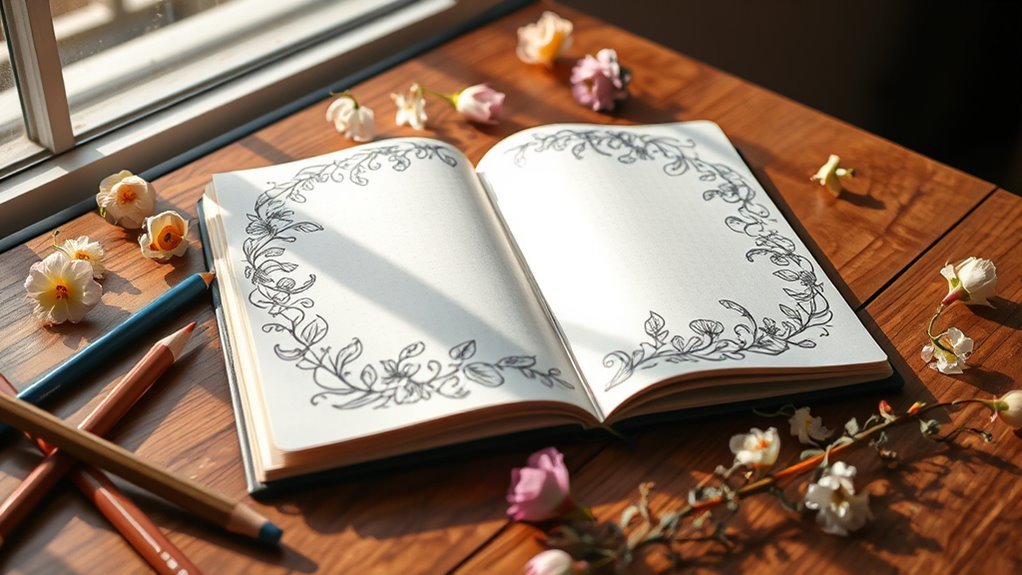
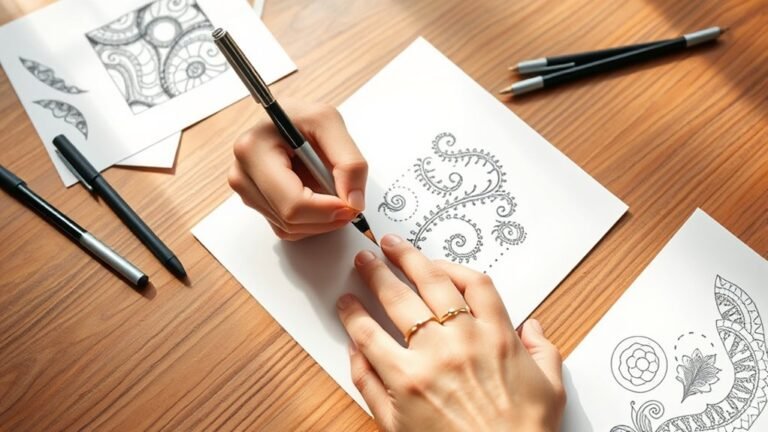
When you start floral border doodles, begin with simple shapes like circles for daisies and elongated ovals for leaves. You can create these charming designs using pencil on paper, allowing easy adjustments before you finalize with pen or marker.
Floral border doodles add a lovely decor touch to journals, greeting cards, or even homemade coloring books. Once you’re happy with the outlines, try adding shading or painting colorful accents to bring your art to life.
These simple shapes form the foundation, but you can build on them by including tiny insects or decorative lines for extra interest. Whether you’re doodling at home or experimenting in an art class, floral border doodles let you explore creativity while making beautiful, personalized decor.
Simple Hand Lettering
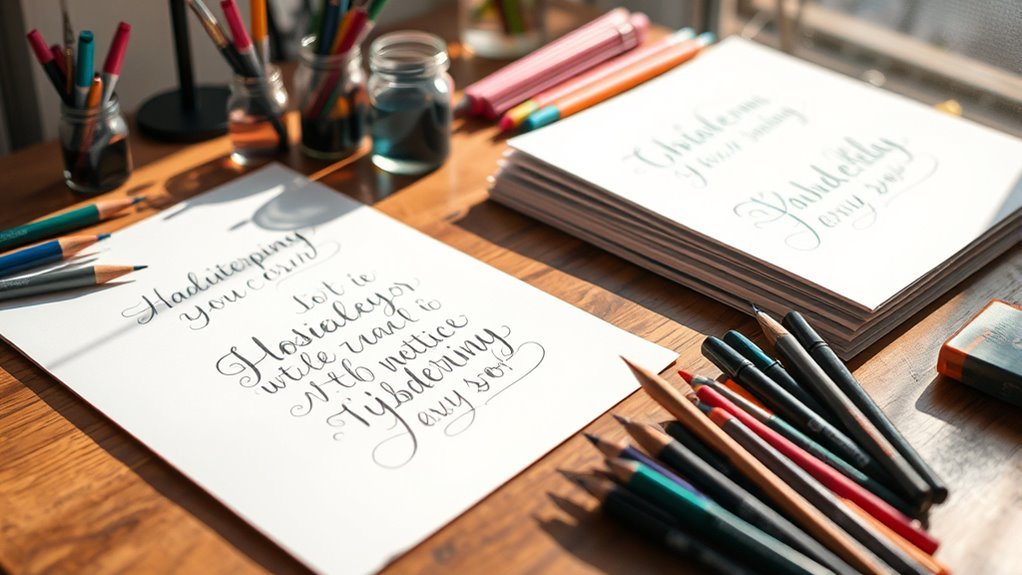
After adding floral border doodles to your project, try enhancing it with simple hand lettering. Start by sketching your letterforms lightly with a pencil on paper to make sure your style and layout work well.
Begin with light pencil sketches before adding hand lettering to complement your floral border doodles.
Use paint pens or markers to outline and add color, experimenting with bubble, block, or faux calligraphy styles. You can create something unique by incorporating decorative elements like serifs, shadows, or flourishes.
Practice regularly by designing quotes, monograms, or alphabet sheets to improve your skills and consistency. While hot glue isn’t typically used in hand lettering, you might use it to attach your finished piece to other surfaces.
Keep experimenting and practicing, and you’ll quickly build confidence in your hand lettering abilities, making every project stand out beautifully.
Rainbow and Colorful Pages
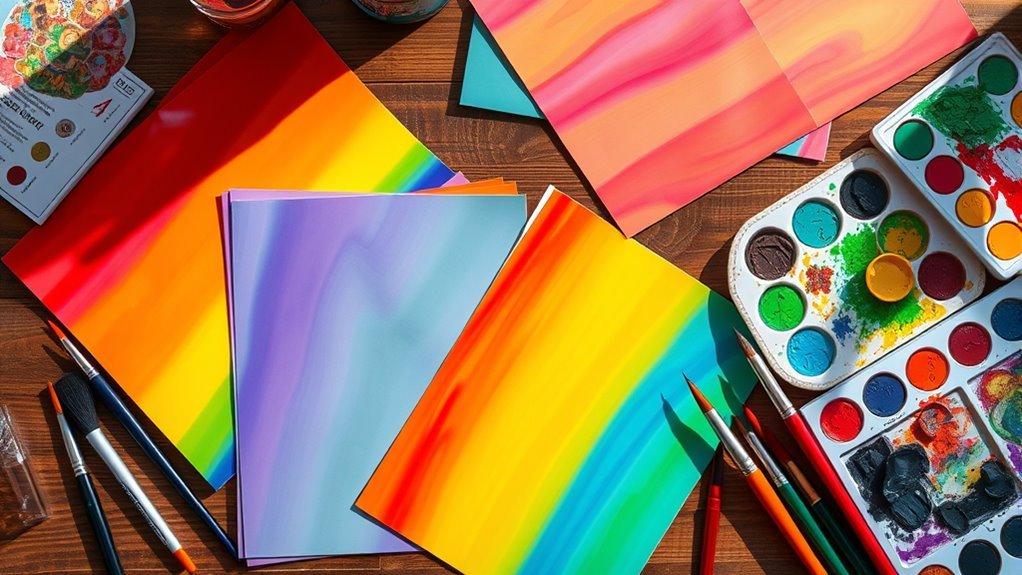
A vibrant rainbow palette instantly brightens your creative pages and lifts your mood. When you create rainbow pages, grab markers in various shades to experiment with layering colors and blending vibrant colors seamlessly.
Use your favorite art supplies to add colorful designs, like floral doodles, hearts, or inspiring quotes. These decorative elements make your creative projects pop with energy and positivity.
Don’t hesitate to mix broad tip markers and fine pens to explore different textures and effects. Play around with color swatches to find the best combinations that suit your style.
Incorporating these lively hues and playful doodles brings a cheerful, uplifting vibe to your bullet journals, planners, or sketchbooks. It makes every page a vibrant expression of your creativity.
Collage and Mixed Media Creations
Although collage and mixed media art might seem complex, you can easily plunge in by combining materials like paper, fabric, stickers, and found objects to create rich, textured compositions. This creative approach encourages experimentation with textures and layering, letting you craft unique visual storytelling pieces.
Use recycled materials such as magazine cutouts or old packaging to keep your projects eco-friendly while adding diverse patterns and colors. You don’t need fancy art supplies—basic items work perfectly, making this accessible for all skill levels.
Whether you’re building mood boards or abstract designs, collage and mixed media let you play freely and express yourself. Dive in, explore different materials, and watch your ideas come to life through this versatile, hands-on art form.
Upcycling Everyday Materials
When you transform everyday items like cardboard boxes, soda cans, or glass jars into creative projects, you’re not only making unique art but also helping the environment. Upcycling lets you decorate your home with one-of-a-kind designs while embracing sustainability.
Use old magazines, glass jars, and scraps to craft picture frames or funky storage containers. With simple tools, you can create art-focused pieces that add charm to your DIY home projects.
| Material | Upcycling Idea |
|---|---|
| Cardboard boxes | Jewelry organizer |
| Soda cans | Pencil holder |
| Glass jars | Candle holders |
| Old magazines | Collage picture frames |
| Scrap fabric | Decorative bunting |
Try these ideas to decorate your home with style and care. You’ll make your space both beautiful and eco-friendly!
Frequently Asked Questions
What Is the 70/30 Rule in Art?
The 70/30 rule in art means you spend 70% of your time practicing fundamentals and 30% experimenting with new techniques or projects.
It helps you build strong skills while keeping your creativity alive and growing.
What Are 100 Things I Can Do When I’m Bored?
You could build a time machine, but since that’s tricky, try 100 things like reading, cooking, exercising, crafting, journaling, exploring nature, learning a language, watching documentaries, organizing, meditating, or even starting a podcast today.
Why not mix it up a bit? Maybe dive into a new hobby or challenge yourself to something creative. It’s all about keeping things fun and interesting when you’re bored!
Are a Lot of Artists ADHD?
Yes, many artists have ADHD, which can boost your creativity and impulsivity.
You might find yourself hyperfocused or easily distracted, but these traits often help you create innovative, experimental art that stands out from the crowd.
It’s kind of like having a unique superpower when it comes to making art!
What Art Does Gen Z Like?
You’ll love digital art like TikTok videos, Instagram reels, and glitch or vaporwave styles. Gen Z digs trendy, eco-friendly projects, viral challenges, and mixed media.
They share their creativity through stickers, illustrations, and sustainable crafts. It’s all about expressing themselves in fun and unique ways!
Conclusion
When boredom strikes, getting creative can boost your mood—did you know that engaging in artistic activities can reduce stress by up to 60%?
So why not try floral border doodles, simple hand lettering, or even upcycling everyday materials? These fun, easy projects not only pass the time but also spark joy and relaxation.
Give yourself the gift of creativity; it’s a simple way to brighten your day and lift your spirits.
Creative art things to do when bored not only help you beat boredom but also improve your mental well-being. Whether it’s doodling, hand lettering, or crafting with recycled items, these activities promote mindfulness and happiness. So next time you’re feeling stuck, dive into one of these creative art things to do when bored and watch your stress melt away while your imagination takes flight!